Why Chlorine Sometimes Doesn't Work
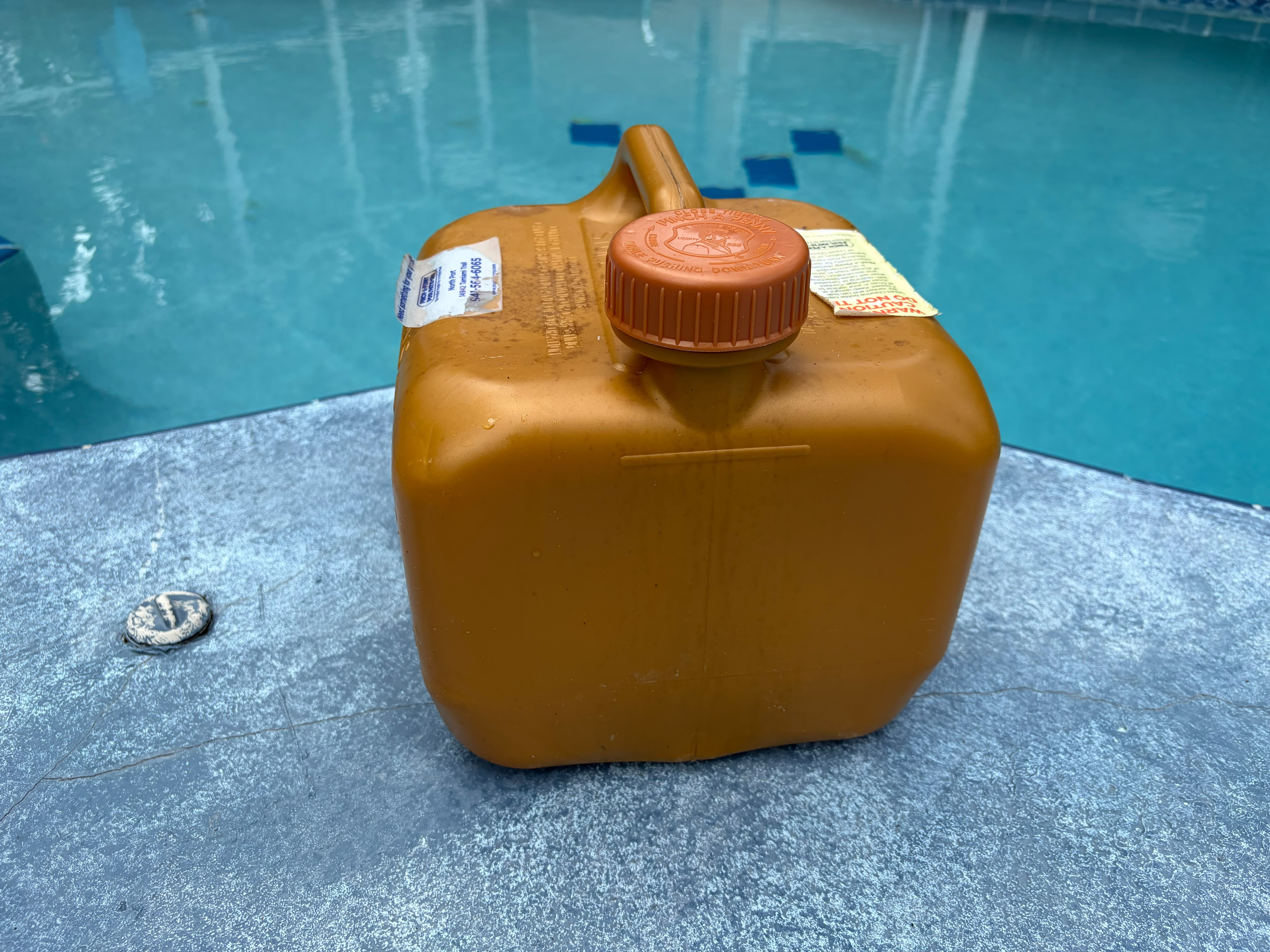
Chlorine sometimes doesn’t work the way pool owners expect because its sanitizing strength depends on more than just how much chlorine you add. In a residential swimming pool, low free chlorine, too much cyanuric acid, unbalanced pH or total alkalinity, warm water, poor circulation or filtration, heavy sunlight, and contaminants in the water can all make chlorine readings drop fast or leave the pool vulnerable to cloudy water and algae even when you are chlorinating regularly.
That is why you can add chlorine, test a few hours later, and find the level already low or back to zero chlorine. This guide walks through the main reasons chlorine seems ineffective, including free and combined chlorine, chlorine demand, the effect of sunlight and stabilizer, balance problems, saltwater pool chemistry, and practical fixes such as shock treatment and partial water dilution. If you want to stop wasting chemicals and keep your pool clear, healthy, and easier to manage, understanding how these factors work together is usually the fastest way to solve the problem.
Free Chlorine Is What Keeps Pool Water Sanitized
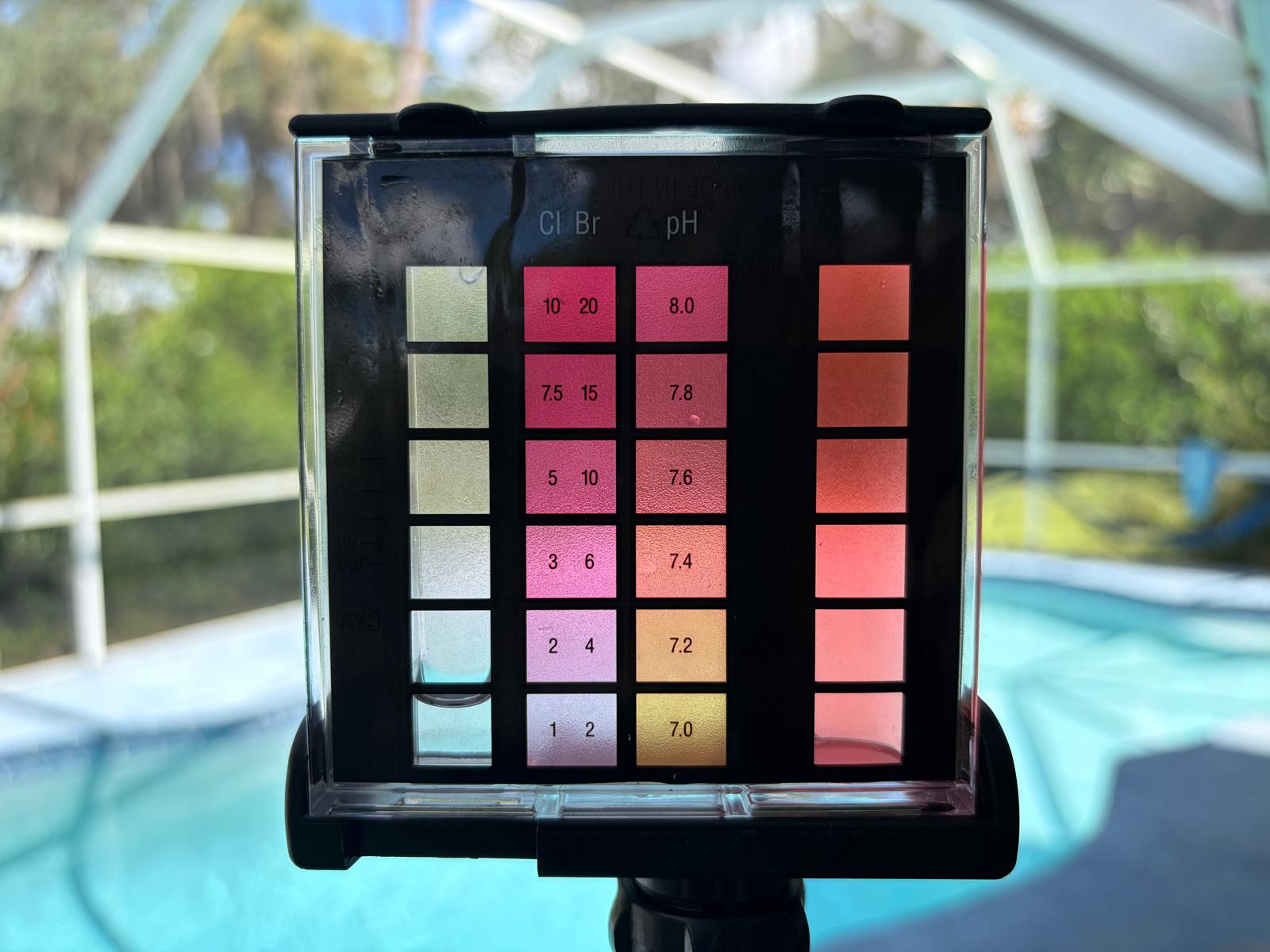
When testing pool water, one of the most important numbers is free chlorine. Free chlorine is the chlorine still available to kill bacteria, control algae, and sanitize the swimming pool. Total chlorine includes both free chlorine and combined chlorine, so a total chlorine reading by itself does not always tell you how much active sanitizer is available.
Combined chlorine forms when free chlorine reacts with contaminants such as sweat, body oils, organic material, and other waste in the water. Once chlorine has reacted with these contaminants, it becomes much less effective as a sanitizer. This is why a pool can technically contain chlorine while still having inadequate free chlorine to maintain good water quality leading to less then perfect looking water.
Most pool owners focus on whether chlorine is present, but the relationship between free chlorine, total chlorine, and combined chlorine provides a much better picture of what is happening in the water. Regular testing with a reliable test kit is far more useful than simply adding chlorine whenever a test strip shows low levels.
High Chlorine Demand Can Consume Chlorine Quickly
One of the most common reasons chlorine seems not to work is high chlorine demand. Chlorine demand describes how quickly contaminants in the pool consume available chlorine. Living contaminants such as bacteria and algae create sanitizer demand, while organic and inorganic material also creates oxidant demand.
Leaves, pollen, sunscreen, sweat, body oils, dirt, insects, and other debris can all consume free chlorine. Algae growth can create especially high chlorine demand because the chlorine is continuously being used to destroy the growing algae. If enough contamination is present, adding chlorine at a normal maintenance level may barely register on the next test.
This is why a pool with a serious chlorine demand problem can appear to “eat” liquid chlorine. You may add chlorine in the morning and test a few hours later only to find that the chlorine levels have dropped dramatically. In those situations, the solution is not always one small dose of sanitizer. The pool may require a larger chlorine treatment, extended filtration, brushing, cleaning, and repeated testing until the chlorine demand has been brought under control.
Sunlight Can Destroy Chlorine
Outdoor swimming pools constantly lose chlorine because of sunlight. UV rays break down chlorine through a process known as UV degradation, and in direct sunlight chlorine can have a roughly 45-minute half-life, causing free chlorine to disappear surprisingly quickly during bright Florida weather.
This is why cyanuric acid, also called CYA or chlorine stabilizer, is so important. CYA protects chlorine from sunlight and allows the sanitizer to remain in the pool longer. For example, at 30 ppm CYA, about 98% of chlorine remains after one hour. Without enough stabilizer, liquid chlorine can disappear rapidly during the day even when the pool chemistry looked good in the morning.
CYA protects chlorine, but the CYA levels still need to remain within an appropriate range. Too little stabilizer increases chlorine loss from sunlight, while excessive cyanuric acid creates a different problem by requiring higher free chlorine levels to maintain the same sanitizing strength.
Too Much Cyanuric Acid Can Cause Chlorine Problems
High cyanuric acid is one of the most common reasons pool owners feel like their chlorine does not work. In the pool industry, this situation is often described as chlorine lock, although chlorine is not literally locked or completely inactive.
As CYA levels increase, the amount of free chlorine required to properly sanitize the pool also increases. If cyanuric acid becomes very high while the chlorine level remains at the same target range used for a lower-CYA pool, algae and bacteria can gain an advantage even though the test results still show some chlorine.
This is known as overstabilization. The pool may stay clear for a while, but eventually water clarity may decline, chlorine demand may increase, and algae growth can begin. Instead of assuming the answer is always more chlorine, the water chemistry should be tested so the CYA level and free chlorine level can be evaluated together.
Stabilized Chlorine Can Slowly Raise CYA Levels
Stabilized chlorine products contain cyanuric acid as part of the chlorine compound. Trichlor tablets, commonly called chlorine tablets, are one of the most familiar examples of stabilized chlorine used in traditional chlorine pools.
Chlorine tablets are convenient because they dissolve slowly and continuously add sanitizer to the pool. However, they also add CYA. The chlorine is consumed over time, but the cyanuric acid stays in the water much longer and can gradually accumulate throughout the season.
This means a pool owner can begin the season with reasonable CYA levels and slowly end up with significantly higher stabilizer levels after months of using trichlor tablets. Eventually, maintaining enough chlorine can become more difficult.
Liquid chlorine does not add cyanuric acid, which makes it useful when CYA levels are already elevated. Cal hypo, or calcium hypochlorite, is another chlorine product that does not add CYA, although it does add calcium to the pool water. Choosing the right chlorine product depends on the existing water chemistry rather than simply selecting whichever sanitizer is most convenient.
Sometimes Fresh Water Is the Best Chemical Fix
When cyanuric acid becomes excessively high, there is usually no simple chemical fix that instantly removes it from the water. In many residential swimming pools, the most practical solution is to partially drain the pool and replace some of the water with fresh water.
Dilution lowers the CYA concentration. For example, replacing a portion of the pool water with fresh water can reduce stabilizer levels and make it easier to maintain an appropriate free chlorine level again.
This is one reason regular testing matters. If high CYA is discovered early, pool owners may be able to adjust the type of chlorine they are using before the problem becomes severe. Waiting until the chlorine demand is high and the pool is turning green can make the process much more difficult.
pH Levels Affect Chlorine Effectiveness
The pH of pool water also affects chlorine performance. Chlorine works most efficiently when the water chemistry is properly balanced, and high pH can reduce the sanitizing strength of chlorine.
Most residential pools are maintained within a pH range of approximately 7.2 to 7.8. As pH rises, chlorine becomes less efficient at killing bacteria and controlling algae. If the pH becomes too high, the pool may require more chlorine to achieve the same sanitizing result.
Low pH creates a different set of problems because acidic pool water can become corrosive to pool surfaces and equipment. Maintaining the proper pH and total alkalinity helps create stable water chemistry and allows chlorine to perform more effectively.
Total alkalinity acts as a buffer that helps prevent sudden changes in pH. When alkalinity is outside the recommended range, pH can become difficult to control, which can affect the overall balance of the swimming pool.
Poor Circulation Can Prevent Chlorine From Reaching the Entire Pool
Even perfectly balanced chemicals cannot sanitize areas where treated water is not circulating effectively. The pump must move chlorinated water throughout the swimming pool so the sanitizer reaches the walls, steps, corners, floor, and other areas where algae and bacteria may begin growing.
Poor circulation can create dead spots where chlorine levels are lower than they are in the rest of the pool. These areas often develop algae first. Brushing the pool helps disturb algae and dirt so the sanitizer can reach those surfaces and the filter can remove suspended particles.
Pump operation is therefore an important part of pool care. If water flow is weak, the pump is not running long enough, or the circulation pattern is poor, adding more chlorine may increase the chlorine reading without solving the underlying problem.
Consistent weekly pool cleaning also helps remove debris, brush problem areas, and keep water moving through the circulation and filtration system properly.
A Dirty Filter Can Make Chlorine Work Harder
A dirty filter is another common reason a pool struggles to stay clear. Chlorine sanitizes the water, but the filter is responsible for physically removing dirt, debris, dead algae, oils, and suspended particles.
When the filter becomes clogged, flow through the pool system can decrease. Reduced flow means less effective filtration and weaker circulation. The pool may develop cloudy water even though chlorine levels appear reasonable.
Good pool maintenance therefore requires more than chemicals. The pump, filter, circulation system, and pool chemistry all have to work together. A chemical fix cannot completely compensate for neglected equipment. Staying ahead of these problems is one reason regular pool maintenance can save you money by preventing small chemistry and equipment issues from becoming expensive problems.
Saltwater Pools Still Depend on Chlorine
A saltwater pool is still a chlorine pool. Instead of regularly adding traditional chlorine products, a salt cell converts dissolved salt into chlorine.
The same basic water chemistry rules still apply. A saltwater pool needs adequate free chlorine, proper CYA levels, balanced pH, appropriate total alkalinity, good circulation, and effective filtration, though its chlorine levels are often lower and steadier, which can feel gentler on the skin and eyes.
If the salt cell is dirty, failing, undersized, or producing too little chlorine, the pool may develop low chlorine levels. High chlorine demand can also exceed the amount of sanitizer the salt cell is capable of producing.
Increasing the salt cell output may solve a minor chlorine shortage, but it may not be enough if algae growth has already started. In that situation, additional liquid chlorine or another appropriate shock treatment may be required to restore the water.
Why a Chlorine Reading Can Drop to Zero
A zero chlorine reading usually means that the available free chlorine has been consumed. High bather load, algae, bacteria, debris, sunlight, organic contamination, and low CYA can all cause chlorine to disappear quickly.
Testing technique matters too. Test strips are convenient for quick checks, but a quality liquid test kit usually provides more detailed test results when diagnosing a difficult pool chemistry problem. If algae keeps returning despite acceptable chlorine readings, ask a pool store or local pool store to test for phosphates.
Testing should include more than chlorine alone. CYA, pH, total alkalinity, and other water chemistry measurements help explain why chlorine levels are rising or falling.
If you continue adding chlorine without checking the other chemistry, you may temporarily raise the chlorine level without fixing the actual reason it keeps disappearing.
Why Shock Treatment Sometimes Doesn't Solve the Problem
Shock treatment is often recommended when pool water becomes cloudy or begins turning green. A sufficiently strong chlorine treatment can kill algae and oxidize contaminants, but adding shock is only part of the process.
If the pool has high CYA, poor circulation, a dirty filter, incorrect pH, or a continuing source of contamination, the chlorine may be consumed rapidly. The water may improve temporarily and then begin deteriorating again several days later.
The correct solution usually involves testing the water, correcting the chemistry, maintaining enough chlorine, brushing the pool surfaces, cleaning the filter, and running the pump long enough to remove suspended material.
Simply adding more chlorine without understanding the cause can waste chemicals and delay the real fix.
Florida Pools Can Develop Chlorine Problems Quickly
North Port pool owners deal with conditions that can dramatically affect chlorine levels. Strong sunlight increases UV degradation, warm water encourages algae growth, heavy rain changes water chemistry, and Florida landscaping constantly introduces pollen, dirt, leaves, and organic debris.
A pool can stay clear for weeks and then suddenly develop cloudy water or begin turning green. Usually the problem did not appear overnight. Chlorine demand, CYA levels, pH, circulation, or filtration had already started moving in the wrong direction before the water clarity changed.
This is why season-long pool maintenance is so important in Southwest Florida. Regular testing allows chlorine problems to be identified before the sanitizer reaches zero and algae gains control of the swimming pool. These problems can build surprisingly quickly, which is why skipping weekly pool service can allow small changes in chemistry or circulation to become much larger problems.
Keeping Chlorine Working Is About Balance
When chlorine seems like it isn't working, adding more chlorine is not always the best first step. The real answer may involve cyanuric acid, high chlorine demand, sunlight, pH levels, poor circulation, a dirty filter, an underperforming salt cell, or contamination in the pool water.
Good pool chemistry is about balance. Free chlorine needs to remain appropriate for the CYA level, pH and alkalinity need to stay within a reasonable range, the pump must circulate the water, and the filter needs to remove contaminants.
Once all of those pieces are working together, chlorine becomes much easier to maintain and the pool stays clear with fewer surprises.
Have questions about chlorine, water chemistry, cleaning, or ongoing maintenance? Visit our pool service FAQ for answers to common questions about caring for your pool.
Harbor Line Pool Care provides professional pool maintenance and north port pool service in North Port, Florida. We test pool water, maintain chlorine levels, balance pool chemistry, clean swimming pools, inspect filtration and circulation, and help prevent the cloudy water and algae problems that occur when chlorine stops keeping up.