How Often Should Cartridge Filters Be Cleaned?

If your swimming pool uses a cartridge filter, one of the most common maintenance questions is simple: how often should cartridge filters be cleaned? In most residential pools, cartridge filters should be cleaned when they need it rather than on a fixed schedule—typically when pressure rises noticeably above the clean starting reading, water flow decreases, or water clarity begins to suffer.
The answer depends on the pool. Some cartridge filters may need attention every few weeks during heavy use, algae cleanup, pollen season, or periods of unusually high debris. Larger filters on well-maintained residential pools may go considerably longer between cleanings.
The best approach is not to clean the filter according to an arbitrary calendar. Instead, monitor filter pressure, water flow, pool condition, and how much debris the system is handling. A clean filter helps maintain strong circulation, good water clarity, efficient chemical distribution, and proper operation of the rest of the pool system.
What Do Cartridge Pool Filters Do?
A cartridge filter uses pleated filter elements to trap dirt and debris as pool water moves through the filtration system. Those pleats provide a large amount of surface area, allowing the filter to capture dirt, leaves, pollen, dead algae, hair, oils, insects, and other fine debris.
The pool pump moves water through the cartridges before cleaner water returns to the pool. Over time, the cartridges become loaded with debris. As that happens, resistance through the filter increases and water flow can begin to decrease.
That is when filter cleaning becomes necessary.
How Often Should Cartridge Filters Be Cleaned?
There is no single cleaning schedule that works for every swimming pool.
A lightly used pool with a large filter and little surrounding vegetation may go several months between cleanings. A pool dealing with heavy pollen, landscaping debris, algae, frequent swimmers, or a relatively small filter may need cleaning much more often.
Rather than automatically cleaning every two weeks, every month, or every three months, use the condition and performance of the filtration system to determine when it is time.
During periods of heavy use or unusually dirty conditions, the filter may need attention much sooner than normal.
Watch the Filter Pressure
The pressure gauge on the filter is one of the most useful indicators of when cartridges are becoming dirty.
After the cartridges have been thoroughly cleaned, note the normal operating pressure. That becomes the system's clean starting pressure.
As dirt accumulates inside the cartridges, pressure will usually begin to rise. A commonly used guideline is to inspect or clean the filter when pressure rises approximately 20 to 25 percent above the clean starting pressure, although recommendations from the filter manufacturer should always take priority.
You may also hear the traditional recommendation to clean a filter after an increase of around 8 to 10 PSI. Because swimming pool systems operate at very different starting pressures, comparing current pressure with your own pool's clean baseline provides more useful information than relying on one number for every pool.
Reduced Water Flow Is Another Warning Sign
Pressure isn't the only thing to watch.
A cartridge filter may need cleaning if the return jets feel weaker than normal, skimming performance decreases, or the filtration system simply doesn't appear to be moving water as effectively as it normally does.
Reduced circulation can make it harder to keep the pool clean because debris isn't moving efficiently toward the skimmer and filter. Chlorine and other chemicals also depend on good circulation to move throughout the pool.
If water flow has noticeably decreased, the cartridges are worth inspecting even if the pressure gauge hasn't changed dramatically.
Cloudy Water Can Be a Clue
Cloudy pool water has many possible causes, including poor chemistry, insufficient chlorine, algae, calcium problems, and inadequate circulation.
A dirty cartridge filter can contribute to the problem.
When cartridges become heavily loaded, the filtration system may not process water efficiently enough to remove fine suspended material. The pool can begin to look dull or hazy even though the water chemistry is reasonably close to normal.
Before assuming cloudy water simply needs more chemicals, make sure the filtration system is clean and moving water properly. A neglected filter can affect more than water clarity. We explain the broader consequences in How Dirty Filters Cost You Money.
Algae Can Clog Cartridges Very Quickly
An algae problem can dramatically shorten the amount of time between filter cleanings.
As algae is killed and removed from the pool water, large amounts of material can end up in the filter. Cartridges can become coated with dead algae surprisingly quickly.
During an algae cleanup, the cartridges may need to be rinsed repeatedly while the pool clears. A filter that would normally operate for months between cleanings might need attention within days under those conditions.
The cleaning schedule should always reflect what the pool is currently dealing with.
Pollen and Landscaping Debris Matter Too
Southwest Florida pools can receive significant amounts of organic debris. Pollen, leaves, grass clippings, insects, seeds, dust, and other material eventually make their way into the filtration system.
Certain times of year may therefore require more frequent cartridge cleaning. Pools surrounded by trees or heavy landscaping will usually place a greater load on their filters than pools with relatively clean surroundings.
These same conditions affect pools throughout Port Charlotte, where our Port Charlotte pool service includes monitoring filtration and circulation as part of regular maintenance.
Keeping skimmer baskets emptied helps capture larger debris before it travels farther into the circulation system and reaches the cartridge.
Skimmer socks can also help capture fine debris such as pollen, but they need to be checked frequently because a clogged skimmer sock can restrict water flow to the pump.
How Do You Clean a Cartridge Filter?
The basic process is relatively straightforward, although every filter should be serviced according to its manufacturer's instructions.
First, shut off the pool pump and make sure it cannot unexpectedly restart. Relieve pressure inside the filter using the air-relief valve when appropriate and confirm that the pressure gauge has returned to zero.
Never attempt to open a pressurized pool filter.
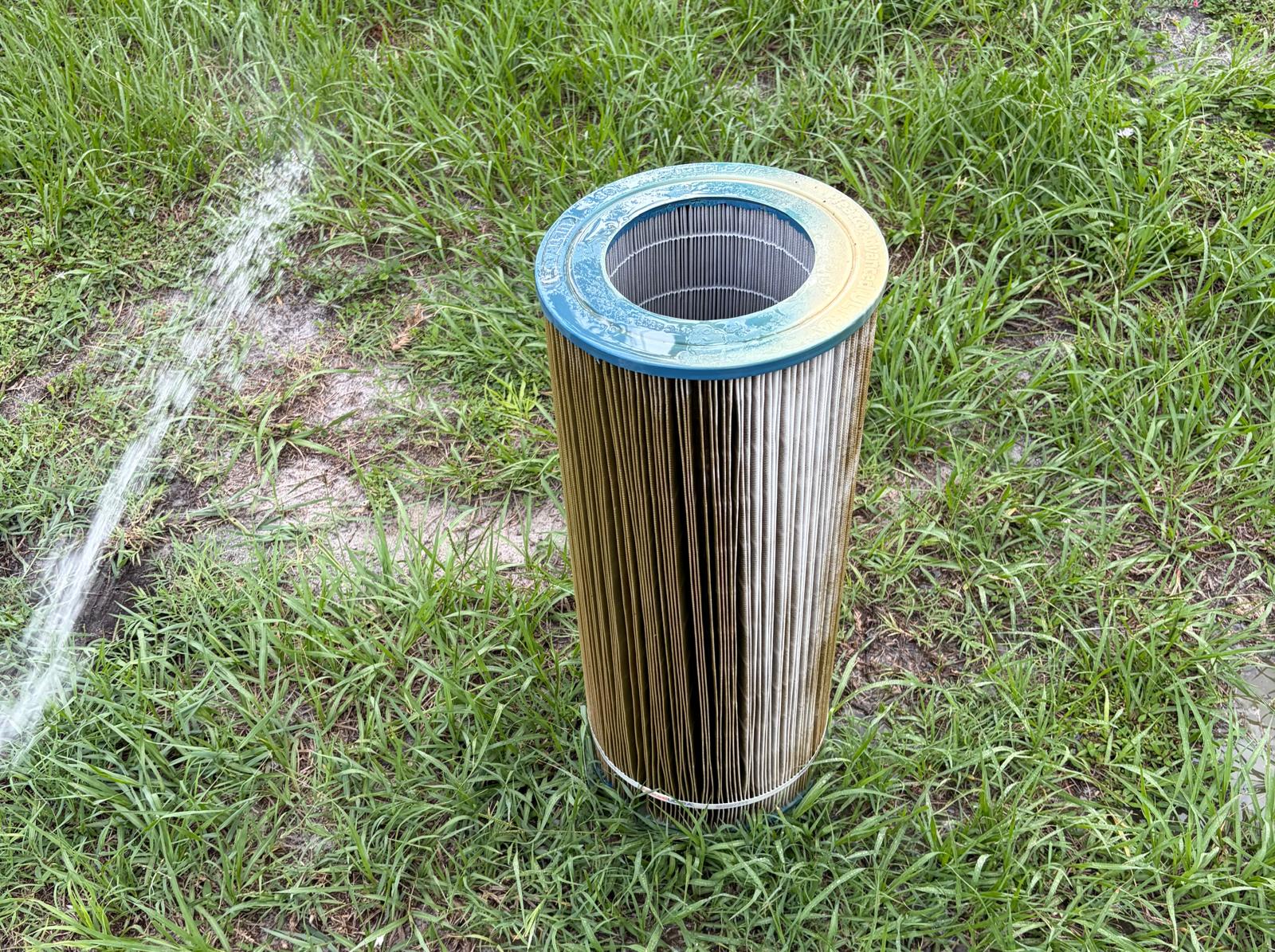
Once the filter is safely depressurized, open the housing and remove the cartridges. Use a regular garden hose with moderate water pressure to rinse debris from between the pleats.
Work carefully around the entire cartridge and make sure dirt is actually being flushed out from inside the folds rather than simply spraying the outside surface.
Don't Use a Pressure Washer
A pressure washer may seem like a faster way to clean a cartridge, but the high-pressure stream can damage the filter material and deform the pleats.
A garden hose with an appropriate nozzle provides enough water pressure for routine cartridge cleaning without unnecessarily damaging the filter media.
The goal is to rinse debris out of the cartridge, not blast the material apart.
Rinse Thoroughly Between the Pleats
A surprising amount of debris can become trapped deep inside cartridge pleats.
Take your time and work around the entire filter. Gently spread the pleats where necessary so water can reach trapped dirt and debris.
A cartridge can look clean on the outside while still containing a considerable amount of material deeper inside.
Thorough cleaning is more important than extreme water pressure.
Do Cartridge Filters Need Deep Cleaning?
Sometimes a garden-hose rinse isn't enough.
Swimming pools accumulate sunscreen, body oils, lotions, and other contaminants that may become embedded in cartridge material. When that happens, the filter may benefit from a deep cleaning using a cleaning solution made for swimming pool filter cartridges.
How frequently this is necessary depends on the pool. A heavily used pool may accumulate oils much faster than a lightly used residential pool.
If the cartridge still feels dirty, greasy, or restricted after a thorough rinse, deeper cleaning may be appropriate.
Should You Soak Cartridge Filters?
Soaking can help remove oils and contaminants that ordinary water doesn't easily rinse away.
Commercial cartridge-filter cleaners are available specifically for this purpose. Follow the cleaner manufacturer's directions as well as any instructions provided by the filter manufacturer.
Depending on the product, cartridges may need to soak for several hours before being rinsed thoroughly.
Stronger chemicals do not automatically produce a cleaner filter. Using the wrong product can damage the filter material.
What About Muriatic Acid?
Muriatic acid is sometimes used when a cartridge has mineral or calcium scale, but it should not be part of ordinary filter cleaning.
If a cartridge contains oils or grease, those contaminants should be removed before considering an acid treatment. Acid is intended for mineral deposits, not routine dirt removal.
Muriatic acid is also a hazardous chemical and requires appropriate protective equipment and careful handling.
Most importantly, never mix muriatic acid with chlorine or other pool chemicals.
For routine cartridge maintenance, a garden hose and an appropriate filter-cleaning product are usually what is needed.
Clean and Inspect the Filter Housing
While the cartridges are removed, rinse accumulated debris from the inside of the filter housing.
It is also a good opportunity to inspect accessible components including the filter tank, O-ring, pressure gauge, air-relief assembly, and sealing surfaces.
If an O-ring is damaged, a gauge isn't functioning, or another part appears worn, addressing it while the filter is already open can prevent problems later.
Equipment checks are just one part of maintaining a swimming pool. For a broader look at professional maintenance, read What's Included in Professional Pool Service?
Reassemble the filter according to the manufacturer's instructions.
Inspect the Cartridges While They're Out
Cleaning is only part of cartridge maintenance.
While the filters are removed, inspect them for cracked end caps, damaged bands, torn filter material, holes, severely flattened pleats, or other obvious damage.
A cartridge can be clean and still be worn out.
If the filter material is damaged, cleaning will not restore its ability to filter properly. At that point, replacement may be the best option.
How Long Do Cartridge Filters Last?
There isn't a useful universal expiration date for a pool cartridge.
How long cartridges last depends on filter size, pool use, water chemistry, debris load, cleaning frequency, cartridge quality, and how aggressively they have been cleaned.
Rather than replacing cartridges simply because they have reached a certain age, look at their physical condition and filtration performance.
If the cartridges are damaged, no longer clean properly, or continue causing circulation problems despite thorough cleaning, it may be time to replace them with new filters.
Proper Pool Chemistry Helps Too
A filter works best when the rest of the swimming pool is maintained correctly.
Consistently low chlorine can allow algae to develop, placing a large additional load on the cartridges. Poorly balanced water can also contribute to mineral deposits or other problems inside the filtration system.
Maintaining proper chemistry helps keep the water cleaner and reduces unnecessary strain on the filter.
Balanced water and clean filters work together. Catching filtration and chemistry problems early can also help prevent unnecessary expenses. Learn more in Why Regular Pool Maintenance Saves You Money.
Keep Skimmer and Pump Baskets Clean
Before water ever reaches the cartridge filter, larger debris should be captured by the skimmer basket and pump strainer basket.
Keeping those baskets clean reduces the amount of material traveling through the circulation system and helps maintain good water flow.
During periods of heavy leaves or other debris, baskets may need attention more frequently than usual.
If circulation suddenly becomes weak, checking these baskets is a good first step before assuming the cartridge filter is the only problem.
How Often Should You Check the Filter?
You don't need to dismantle a cartridge filter every week.
You should, however, regularly look at the pressure gauge, check the strength of the return flow, empty the skimmer and pump baskets when needed, and pay attention to water clarity.
Those quick observations make it easier to recognize when something has changed. Monitoring water clarity, circulation, and overall pool condition is part of our weekly pool cleaning approach.
Knowing what normal operation looks like for your pool is more valuable than following an arbitrary cleaning date.
Don't Clean Cartridges More Than Necessary
More cleaning isn't necessarily better.
Removing and aggressively cleaning cartridges when they don't need it creates unnecessary wear on the filter material.
If pressure is normal, circulation is strong, the water is clear, and the cartridges were recently serviced, there may be no reason to open the filter again.
Cleaning should be based on actual need.
The Right Cleaning Schedule Is Different for Every Pool
There is no rule saying every cartridge filter must be cleaned every two weeks, every month, or exactly every three months.
The correct schedule depends on the pool, filter size, environment, swimmer load, water chemistry, and the amount of debris entering the system.
A pool with a large cartridge filter, low swimmer load, clean surroundings, and balanced chemistry may go considerably longer between cleanings.
A smaller system dealing with pollen, algae, heavy swimming, or large amounts of debris may need attention much sooner.
Use filter pressure, water flow, water clarity, and cartridge condition to decide when cleaning is actually necessary.
Professional Cartridge Filter Cleaning in North Port, Florida
Southwest Florida pools can place a heavy load on cartridge filters. Warm weather, heavy rain, pollen, landscaping debris, long swimming seasons, and occasional algae problems can all increase the amount of material captured by the filtration system.
At Harbor Line Pool Care, we monitor circulation, filter pressure, water chemistry, and overall equipment performance as part of regular pool maintenance.
Our North Port pool service focuses on consistent cleaning, water testing, and equipment monitoring to help identify maintenance needs before they become larger problems.
That allows us to recognize when a cartridge filter actually needs cleaning instead of relying on an arbitrary calendar.
Keeping cartridges clean helps maintain strong water flow, effective filtration, proper chemical circulation, and better overall pool performance.
A clean cartridge filter doesn't just help the pool look better. It helps the entire circulation system do its job.