Why Balanced Water Protects Your Pool Equipment
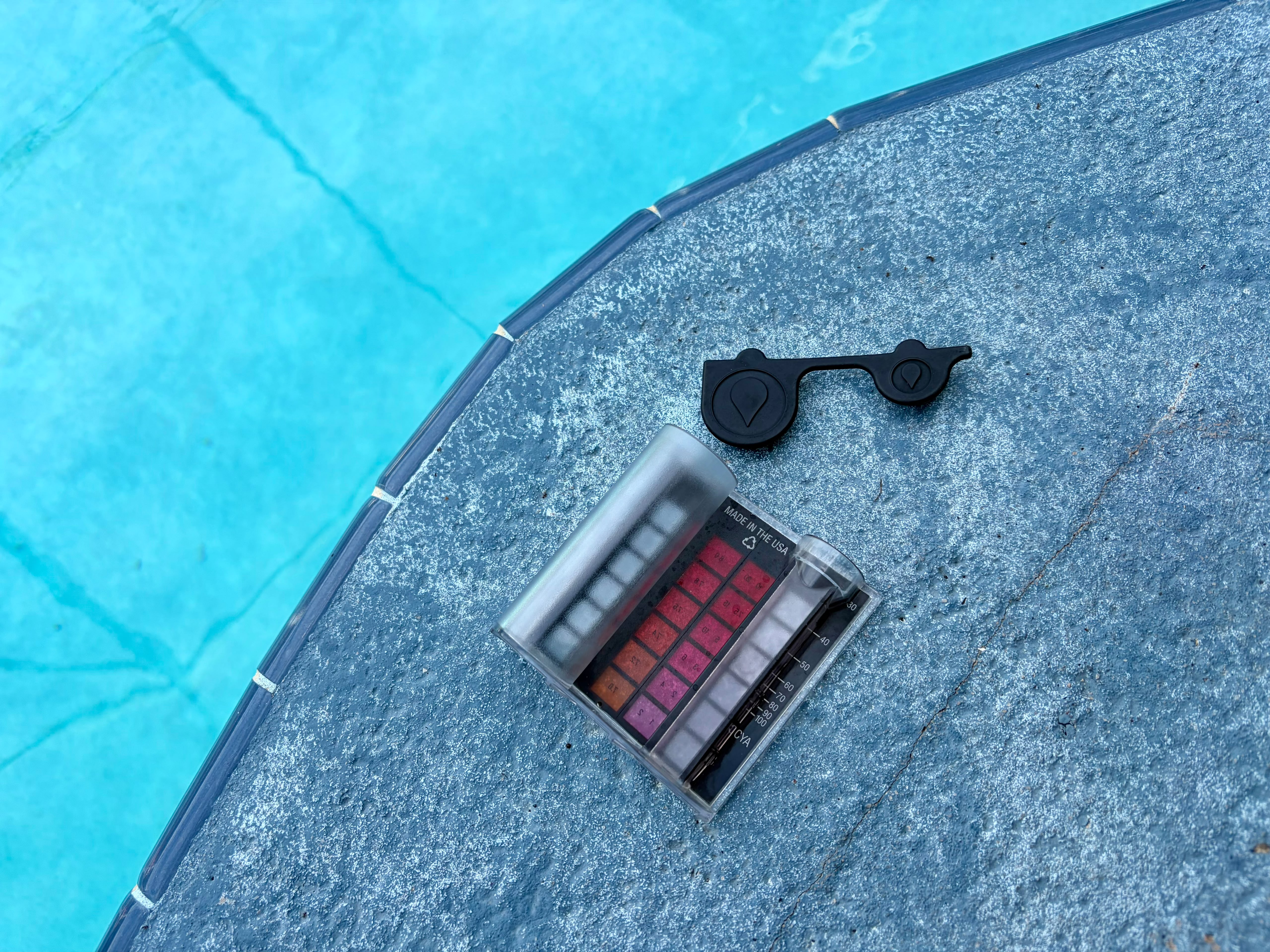
Most pool owners think about water chemistry in terms of whether the pool looks clean and is safe to swim in.
That is certainly important, but properly balanced pool water also protects pool equipment by keeping chemical levels in the right range so the water does not turn corrosive or scale-forming. For homeowners with residential pools, that can mean fewer repairs, longer life for expensive parts, and more efficient day-to-day operation.
Your pump, filter, heater, plumbing, salt cell, metal fittings, pool finish, tile, and other components are constantly exposed to thousands of gallons of chemically treated water. When that water stays properly balanced, those components can operate under the conditions they were designed for.
When the pool water chemistry becomes significantly unbalanced, however, the water can become either corrosive or scale-forming.
Both conditions can gradually damage expensive pool equipment.
A swimming pool can therefore look crystal clear while still having water chemistry that is slowly shortening the life of the equipment. As we explain in why your pool water looks perfect until it doesn't, clear water can hide developing chemistry problems long before visible warning signs appear. The sections below explain what balanced water means, how pH, alkalinity, calcium hardness, and related factors affect equipment, why regular testing matters, and how proper chemistry also helps sanitizer work more effectively.
That is why professional pool maintenance involves much more than simply adding chlorine.
What Does “Balanced Pool Water” Actually Mean?
Balanced pool water means keeping several different chemical measurements within appropriate ranges while considering how those measurements interact with one another.
Important factors include:
- pH
- Total alkalinity
- Calcium hardness
- Free chlorine
- Cyanuric acid
- Water temperature
- Salt concentration when a saltwater chlorinator is installed
No single test result tells the entire story.
For example, a calcium hardness reading that might be perfectly manageable at one pH could contribute to calcium scale if the pH rises substantially.
Likewise, water with low pH and low total alkalinity can become aggressive enough to attack certain pool surfaces and metal components.
Proper water balance means looking at the chemistry as a system rather than adjusting one number in isolation.
Low pH Can Make Pool Water Corrosive
One of the most damaging conditions for swimming pool equipment is persistently low pH.
When the pH drops too far, the water becomes increasingly acidic.
Acidic or corrosive water can gradually attack metal components throughout the pool system.
Depending on the equipment installed, those components may include copper heat exchangers, stainless steel hardware, pump components, plumbing fittings, heater parts, and other metal surfaces.
Over time, corrosion can lead to staining, leaks, weakened components, and premature equipment failure.
If you've ever seen blue-green staining in a pool containing copper components, corrosive water may be one possible contributor.
Keeping pH in an appropriate range helps prevent the pool water from becoming unnecessarily aggressive by maintaining proper pH levels.
For many residential swimming pools, balanced water maintains an ideal pH of approximately 7.2 to 7.6, with many pool professionals preferring to operate closer to the middle of that range.
Total Alkalinity Helps Stabilize pH
Total alkalinity is closely connected to pH.
Think of alkalinity as a buffer that helps prevent the pool's pH from changing too rapidly or the water from becoming too alkaline.
If total alkalinity becomes too low, the pH can become unstable and may drop quickly when acidic chemicals or other contaminants enter the water.
That creates the possibility of corrosive conditions.
A commonly used residential target for total alkalinity is somewhere around 80 to 120 ppm, although the ideal range can vary depending on the sanitizer system and the individual pool.
The important point is that alkalinity isn't simply another number on a water test.
It helps stabilize the entire chemical balance of the pool.
High pH Can Create a Different Problem: Scale
Low pH can cause corrosion.
High pH can cause a completely different set of problems.
As pH rises, calcium becomes more likely to precipitate out of the water and form calcium scale, particularly when calcium hardness and water temperature are also elevated.
Scale often begins as a rough white deposit on tile, pool surfaces, fittings, salt cells, or other areas where water is circulating.
But what homeowners can see may only be part of the problem.
Scale can also form inside equipment and plumbing.
That buildup can restrict water flow, reduce heat transfer, interfere with saltwater chlorinators, and make pumps and filtration systems work less efficiently.
Over time, what began as a chemistry problem can become an equipment problem.
Why Calcium Hardness Matters
Calcium hardness measures the amount of dissolved calcium in the pool water.
Calcium is necessary in many swimming pools, particularly those with plaster, marcite, quartz, or other cement-based surfaces.
If the calcium concentration becomes too low, the water may become aggressive toward calcium-containing pool surfaces.
If calcium hardness becomes too high, particularly when combined with high pH, the water becomes increasingly likely to form scale.
A broad residential range of approximately 200 to 400 ppm for calcium hardness levels is commonly used, although the appropriate calcium hardness level depends heavily on the type of pool surface and the rest of the water chemistry.
This is another reason homeowners shouldn't treat a pool test like a simple checklist.
Calcium hardness, pH, alkalinity, water temperature, and other factors all influence whether the water tends toward corrosion or scale formation.
Scale Can Damage More Than Pool Surfaces
Most people think of calcium buildup as a cosmetic problem.
Sometimes it is.
White deposits along the waterline certainly aren't attractive.
But scale can also affect the equipment that keeps the pool operating.
Calcium buildup can develop inside:
- Pool heaters
- Salt chlorine generator cells
- Pipes and fittings
- Filters
- Return lines
- Valves
- Other circulation components
A scaled heat exchanger, for example, may transfer heat less efficiently.
A heavily scaled salt cell may produce chlorine poorly or require more frequent cleaning.
Restricted plumbing can reduce water flow.
And when water flow decreases, the pump, filter, and sanitizer system may all become less effective.
Maintaining balanced pool water helps prevent those problems before they begin.
Corrosion Can Shorten the Life of a Pool Heater
Pool heaters are particularly sensitive to poor water chemistry.
Many pool heaters contain metal heat exchangers that are continuously exposed to circulating pool water.
If the water remains excessively acidic, those metal surfaces can gradually corrode.
Heater damage can become expensive very quickly.
Replacing a heat exchanger—or an entire heater—is considerably more expensive than regularly testing and adjusting the pool water.
This is why balanced water chemistry is not merely about swimmer comfort.
It is part of protecting the homeowner's investment.
Saltwater Pools Still Need Balanced Water
Saltwater pools sometimes get described as though they require very little chemical maintenance, and the same water-balance principles also apply to spas.
They still require careful water balance.
A saltwater chlorinator produces chlorine from dissolved salt, but it doesn't automatically manage pH, alkalinity, calcium hardness, cyanuric acid, or every other aspect of pool chemistry.
In fact, saltwater pools frequently experience rising pH.
If that rise is ignored, calcium scale can form on the salt cell and elsewhere in the circulation system.
Heavy scale on the cell can interfere with chlorine production and may eventually shorten the cell's useful life.
That is why checking the chemistry remains crucial even when the pool appears clean.
Balanced Water Helps Chlorine Work More Effectively
Pool equipment isn't the only thing affected by chemical balance; it also affects swimmers.
Sanitizer performance is affected as well.
Chlorine performs differently depending on the pool's pH and cyanuric acid level.
If the chemistry is poorly managed, homeowners may find themselves continually adding more pool chemicals while still fighting cloudy water, algae blooms, or inconsistent chlorine levels, and off-range pH can contribute to eye irritation and skin discomfort.
That doesn't necessarily mean the pool needs more chlorine.
Sometimes the problem is the underlying chemistry.
Maintaining appropriate pH, cyanuric acid, circulation, and sanitizer levels allows chlorine to perform its job more efficiently.
And when chlorine can effectively control harmful bacteria, algae, and organic contaminants, the filter and circulation system also have less unnecessary material to deal with.
What About Free Chlorine Levels?
You may see general recommendations suggesting 1 to 3 ppm of free chlorine, with ppm meaning parts per million, in a residential pool.
That number doesn't tell the entire story when cyanuric acid is present.
As we discussed in our article about cyanuric acid (CYA), chlorine and CYA work together.
The higher the pool's CYA level becomes, the more free chlorine is generally required to maintain effective sanitation.
That means chlorine shouldn't be adjusted according to a single universal number without considering the pool's stabilizer level.
The goal is maintaining an appropriate sanitizer level for that particular pool.
Cloudy Water Can Be a Warning Sign
Cloudy pool water can have many causes.
Sometimes it is related to filtration.
Sometimes algae is beginning to develop.
Sometimes calcium is precipitating from the water.
Sometimes the sanitizer level is simply too low.
Whatever the cause, cloudy water is a good reminder that pool chemistry and equipment performance are closely connected.
The pump moves the water.
The filter removes debris.
The sanitizer controls microorganisms.
The chemical balance helps all of those systems operate correctly.
When one part of that system falls behind, the others often have to work harder.
What Is the Langelier Saturation Index?
Pool professionals sometimes use the Langelier Saturation Index, or LSI, as another tool for evaluating water balance.
The index considers several factors, including:
- pH
- Total alkalinity
- Calcium hardness
- Water temperature
- Total dissolved solids
The purpose is to estimate whether the water is more likely to be corrosive, relatively balanced, or scale-forming.
An LSI calculation doesn't replace proper testing or professional judgment, but it can provide useful information that individual test results don't show on their own.
For example, calcium hardness might appear acceptable when viewed by itself, but the combination of high calcium, high pH, and warm water could still create scale-forming conditions.
Looking at the complete water chemistry helps identify those situations before visible problems develop.
Balanced Water Protects Pool Surfaces Too
The same water flowing through your pump and heater is also in constant contact with the pool's interior surface.
Improper chemical balance can contribute to staining, etching, discoloration, scale buildup, deterioration of cement-based surfaces, and damage to certain liners and fixtures.
A pool surface is expensive to replace.
Preventing damage through proper water maintenance is considerably less expensive than resurfacing a swimming pool prematurely.
This is why protecting pool surfaces and protecting pool equipment are really part of the same job.
Both depend on maintaining water that is chemically balanced.
Regular Testing Prevents Expensive Surprises
One of the easiest ways to protect a pool is simply to test it consistently so unbalanced water is caught early.
During Florida's swimming season, pool chemistry can change quickly.
Heavy rainfall can dilute chemicals.
Hot sunny weather can increase chlorine demand.
Evaporation can concentrate minerals.
Heavy swimmer usage introduces contaminants, and water outside the normal range can become less comfortable and harder to manage.
Saltwater systems can gradually push pH upward.
Leaves and organic debris can increase sanitizer demand.
Regularly testing the water allows those changes to be corrected before they become larger problems. Missing even a single maintenance visit can allow chemical imbalances and circulation problems to go unnoticed. Learn more about what happens if you skip weekly pool service.
For most actively used residential pools, testing at least weekly is a sensible minimum, with some measurements checked more frequently depending on conditions.
Professional pool service may test important parameters every service visit while monitoring slower-changing measurements such as calcium hardness and cyanuric acid at appropriate intervals.
Test Strips vs. Liquid Test Kits
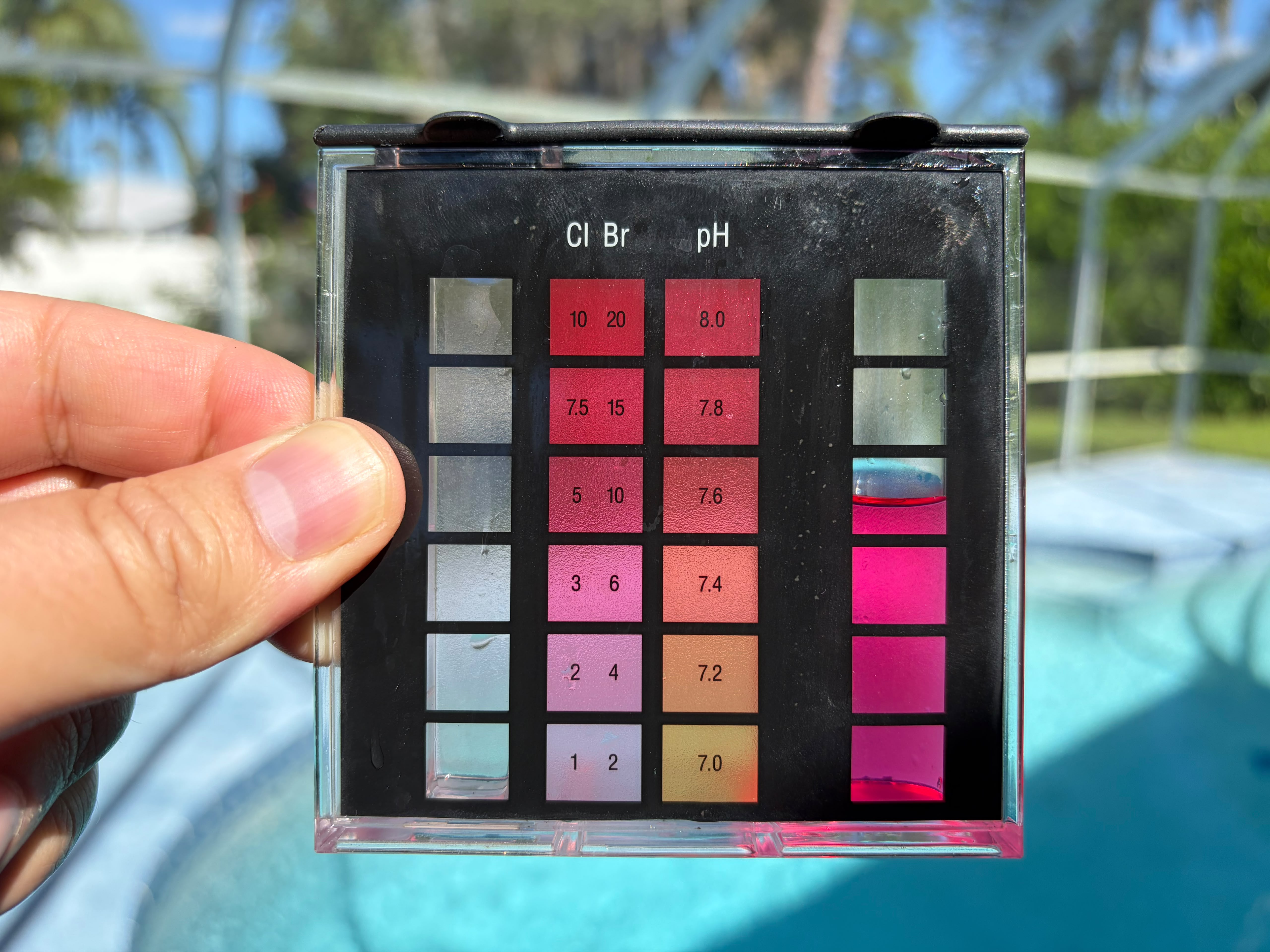
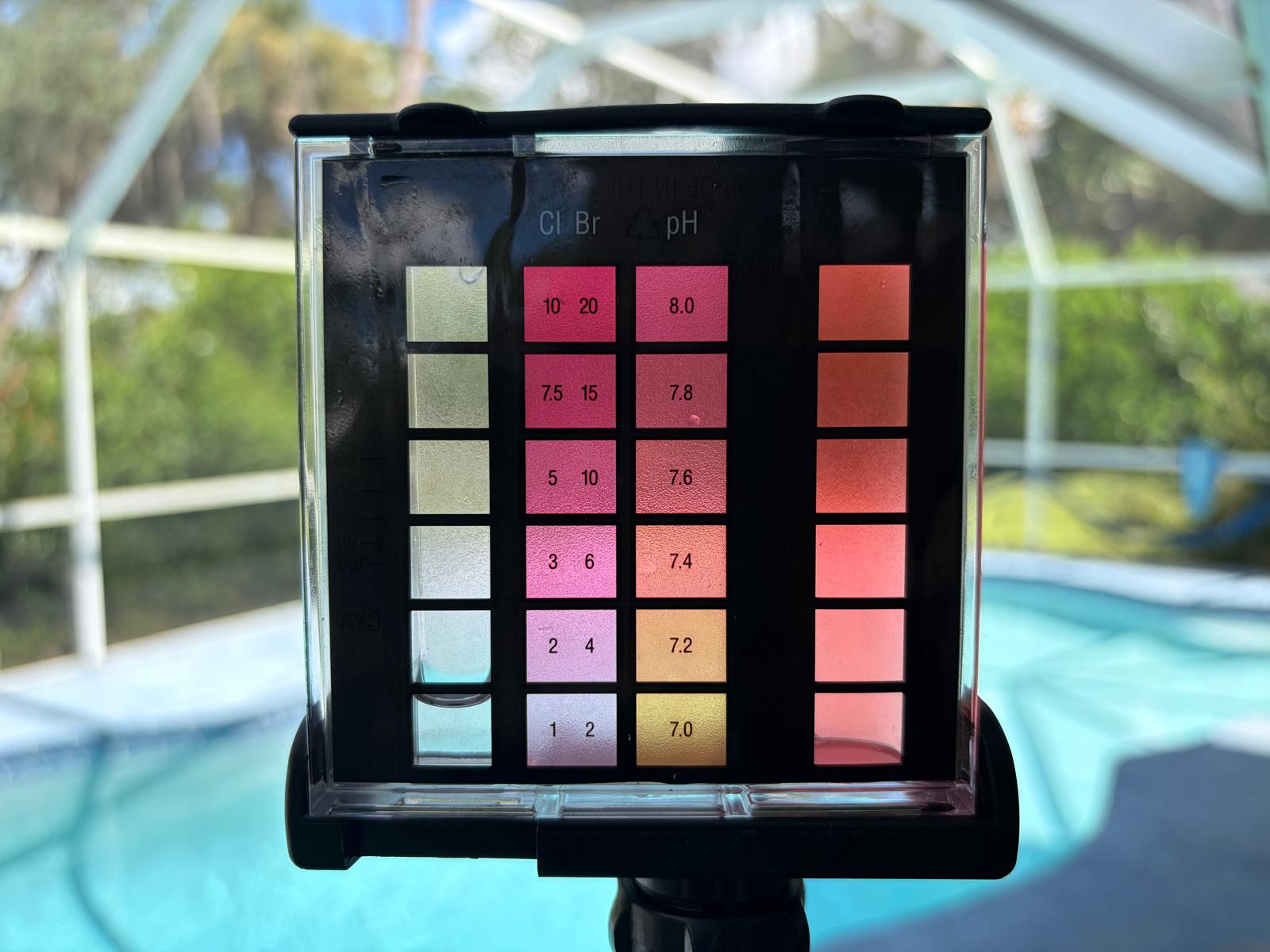
Test strips are convenient and can provide homeowners with a quick overview of the pool's chemistry.
They are useful for spotting obvious problems.
But when accurate adjustments are needed, quality liquid test kits are generally much more useful.
A professional-style test kit can provide more precise measurements for chlorine, pH, total alkalinity, calcium hardness, and cyanuric acid.
Accurate test results matter because pool chemicals are being added based on those numbers.
If the original measurement is inaccurate, the chemical adjustment may also be inaccurate.
Guessing at pool chemistry can easily turn one problem into another.
More Chemicals Aren't Always the Answer
A common mistake in DIY pool care is assuming that every water problem requires adding another chemical.
Sometimes the correct solution is actually adding less.
If the pH is already appropriate, there is no reason to adjust it simply because another test result changed.
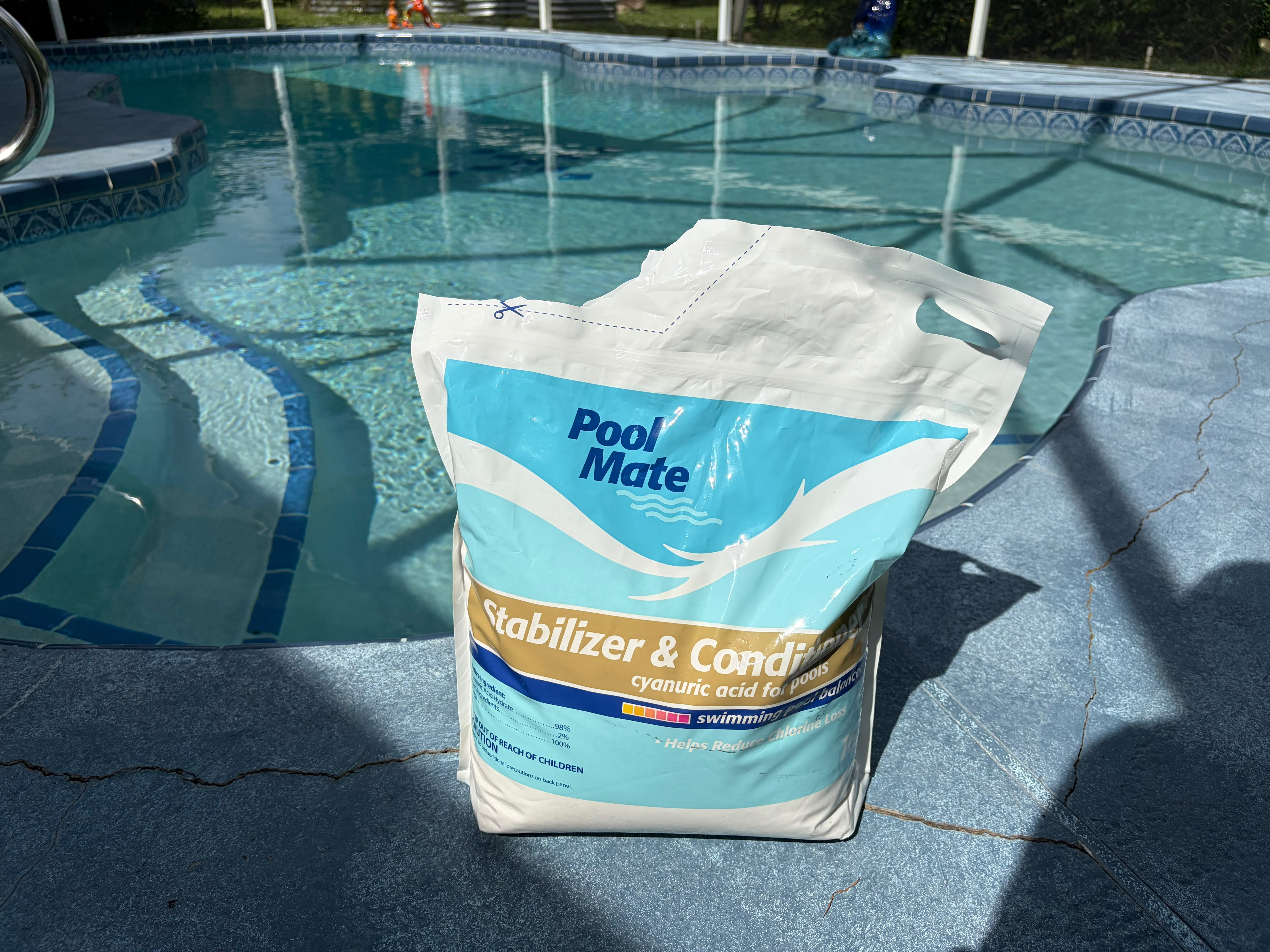
If CYA is already high, adding stabilized chlorine tablets may make the problem worse.
If calcium hardness is high, adding calcium obviously isn't going to help.
Professional pool maintenance is largely about understanding what the water actually needs rather than continually pouring chemicals into it.
Balanced water is the result of measured adjustments.
Proper Water Balance Can Save Pool Owners Money
Pumps, filters, heaters, salt systems, pool finishes, and plumbing are expensive.
Replacing them prematurely because of corrosion or scale is even more expensive.
Maintaining proper pool chemistry helps reduce:
- Premature equipment replacement
- Heater corrosion
- Salt-cell scaling
- Plumbing restrictions
- Surface damage
- Excessive chemical usage
- Repeated algae treatments
- Unnecessary service calls
Over the lifetime of a swimming pool, those savings can be substantial. DIY pool care may appear inexpensive at first, but chemical mistakes and unnecessary equipment repairs can change that calculation. We explore these costs in is DIY pool maintenance really saving you money?
A few minutes of testing and proper adjustment each week can protect equipment worth thousands of dollars.
Balanced Pool Water Is Preventive Maintenance
It is easy to think of pool maintenance as cleaning leaves, brushing walls, vacuuming debris, and keeping the water clear.
But water chemistry is also equipment maintenance. Consistent weekly pool cleaning combines proper water testing, chemical balancing, brushing, and routine equipment monitoring to help prevent problems before they become expensive.
Balanced pool water helps prevent corrosion when pH and alkalinity are too low.
It helps prevent scale when pH and calcium hardness become too high.
It allows chlorine to sanitize more efficiently.
It protects surfaces.
And it creates better conditions for the pump, filter, heater, plumbing, and sanitizer system to operate as designed.
The goal isn't just a pool that looks good today.
It is a pool that continues operating properly for years.
Professional Pool Maintenance in North Port, Florida
Southwest Florida swimming pools operate under demanding conditions. These same water chemistry challenges affect homeowners throughout our Port Charlotte pool service area, where heat, rainfall, and changing pool conditions make routine water balancing especially important.
Our pools deal with strong sunlight, hot water temperatures, heavy summer rainfall, long swimming seasons, windblown debris, and rapid changes in chemistry, even with a screened enclosure or pool roof in place.
At Harbor Line Pool Care, our team monitors chemistry changes during routine weekly pool service, which involves more than simply making the water look clean. Our North Port pool service focuses on keeping water balanced, protecting pool equipment, and maintaining clear, healthy swimming pools throughout the year.
We test and balance the pool water, maintain sanitizer levels, brush and clean the pool, monitor filtration and circulation, and watch for developing chemistry problems that can affect both water quality and expensive pool equipment.
Proper North Port pool maintenance protects the entire swimming pool system.
Because the best time to correct corrosive water, high calcium, rising pH, or developing scale is before it turns into a damaged heater, clogged salt cell, stained surface, or expensive equipment replacement.