Is DIY Pool Maintenance Really Saving You Money?
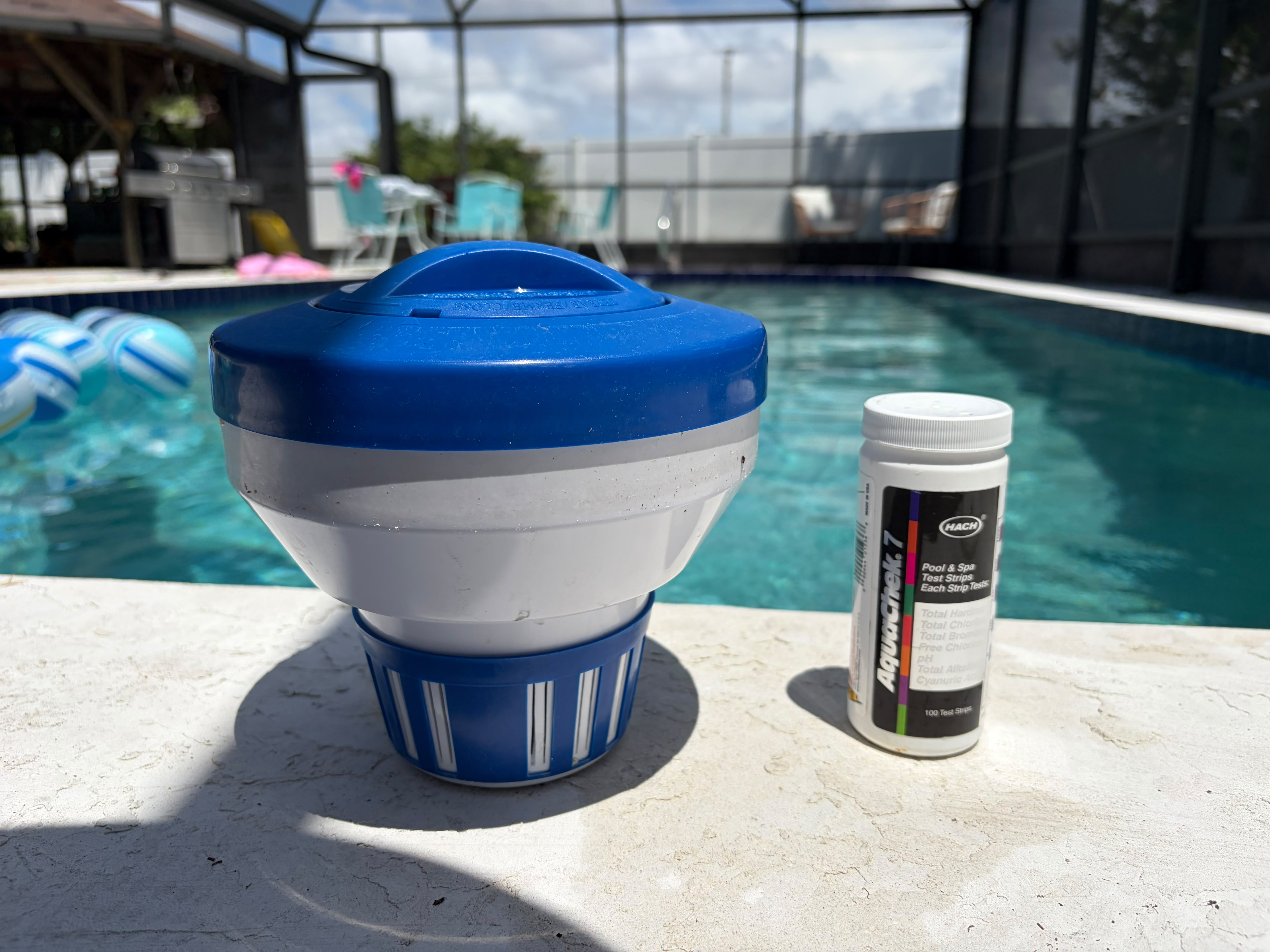
Is DIY Pool Maintenance Really Saving You Money?
DIY pool maintenance sounds like an easy way to save money.
Instead of paying for professional pool services every month, you buy the chemicals, skim the debris, test the water, vacuum the pool floor, and take care of everything yourself.
For some pool owners, that works extremely well.
But is DIY pool maintenance really saving you money?
The answer depends on much more than the price of chlorine.
Maintaining your own swimming pool requires chemicals, a reliable testing kit, cleaning equipment, replacement parts, time, and enough knowledge about water chemistry to recognize small problems before they become costly ones.
For homeowners in Southwest Florida, there is another factor: pools require attention throughout almost the entire year. Our warm climate, intense sunlight, heavy rain, algae growth, and long swimming season can turn a simple DIY pool care routine into a bigger job than many homeowners expect.
Let's look at what maintaining your own pool actually costs, where DIY maintenance can save money, and where mistakes can erase those savings surprisingly quickly.
What Does DIY Pool Maintenance Actually Involve?
A well-maintained pool needs more than chlorine.
Basic swimming pool maintenance involves keeping the water sanitized, balancing the water chemistry, removing debris, cleaning pool surfaces, maintaining good circulation, and inspecting equipment for potential issues.
A typical DIY pool care routine may include:
- Testing pool water
- Checking chlorine levels
- Monitoring the pool's pH
- Checking total alkalinity
- Monitoring cyanuric acid
- Checking calcium hardness when needed
- Adding chemicals
- Skimming surface debris
- Emptying skimmer baskets
- Brushing the pool walls and steps
- Vacuuming the pool floor
- Cleaning or monitoring the filter
- Checking water flow
- Inspecting equipment
- Watching for algae buildup
- Monitoring the pool pump
- Keeping the water level where it belongs
None of those tasks is especially complicated by itself.
The challenge is doing all of them consistently and understanding how they affect one another.
The Real Cost of DIY Pool Maintenance
When many pool owners calculate the cost of DIY maintenance, they think primarily about pool chemicals.
Buy chlorine.
Buy some acid.
Maybe keep a few chlorine tablets around.
Done.
Unfortunately, that's only part of the cost.
A homeowner maintaining their own pool also needs the right tools.
Depending on the pool, that can include a telescopic pole, pool brush, skimmer nets, vacuum heads, hoses, a pool vacuum or pool cleaner, filter-cleaning supplies, and a reliable testing kit.
Some of those are one-time purchases. Others wear out and eventually need to be replaced.
Then there are the chemicals.
A typical pool may require liquid chlorine, muriatic acid, and other products depending on the results of chemical testing.
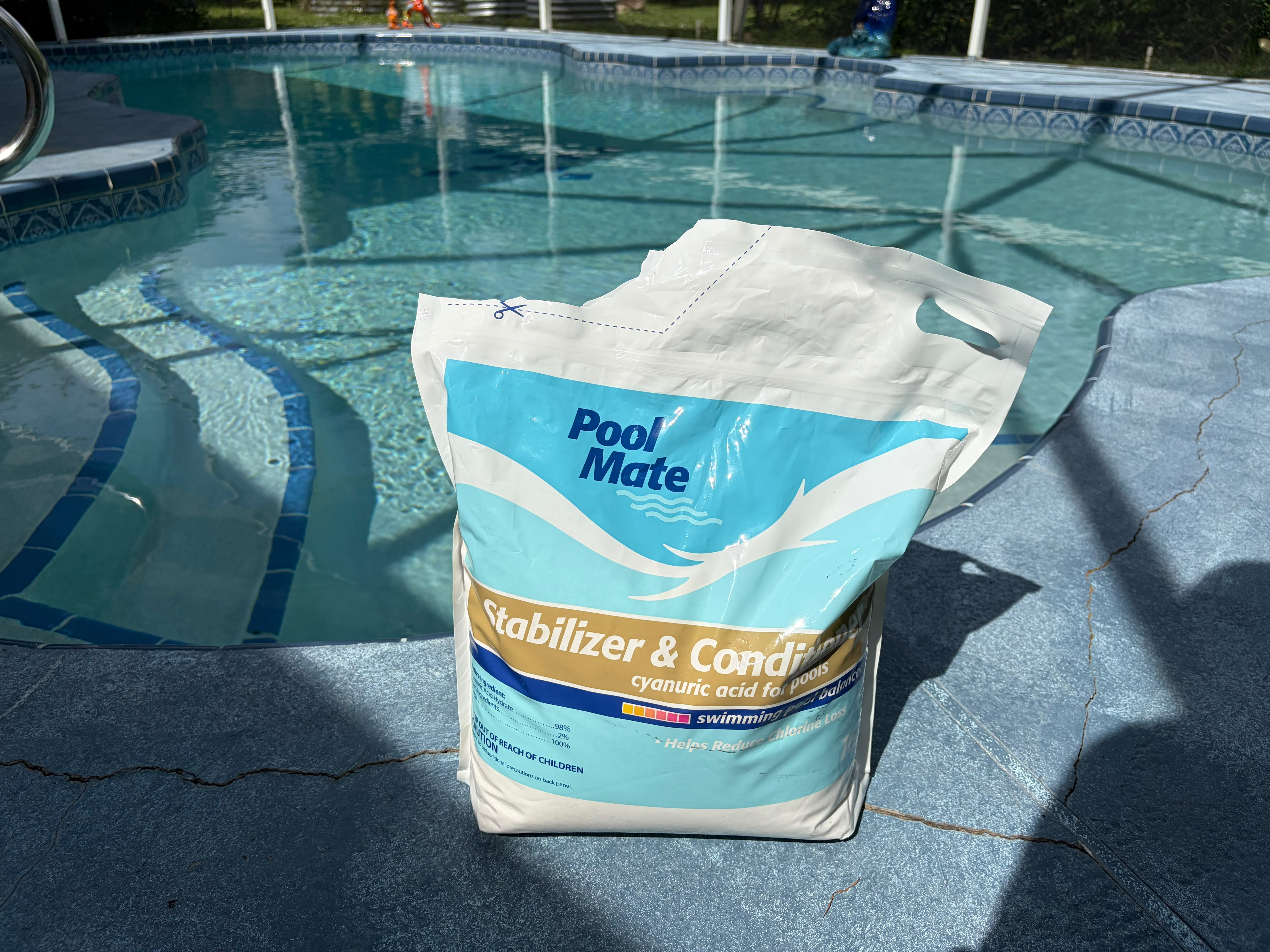
Some homeowners also use chlorine tablets, which can be useful in certain situations but also add cyanuric acid to the water. Continually adding tablets without monitoring cyanuric acid can eventually make chlorine management more difficult.
Baking soda can raise total alkalinity, but that doesn't mean every pool with a chemistry problem needs baking soda.
That's one of the biggest lessons in DIY pool maintenance:
Knowing what chemical to add is only half the job.
You also need to know whether the pool actually needs it.
DIY Pool Maintenance Can Save Money When It's Done Correctly
There absolutely are homeowners who save money maintaining their own swimming pools.
If you enjoy doing the work, understand basic water chemistry, already own the right tools, and consistently perform regular pool maintenance, DIY pool care can reduce what you spend on professional service.
The key word is consistently.
A pool owner who tests the water regularly, makes small chemical adjustments, removes debris, monitors the filter, and catches algae growth early may be able to keep a pool looking great without professional weekly service.
Buying certain pool chemicals economically can also reduce costs.
But buying chemicals cheaply isn't useful if you're using more than necessary because the water isn't being tested correctly.
Saving money with DIY maintenance comes from accurate testing and proper maintenance, not simply buying inexpensive chlorine.
Your Water Testing Kit May Be the Most Important DIY Tool
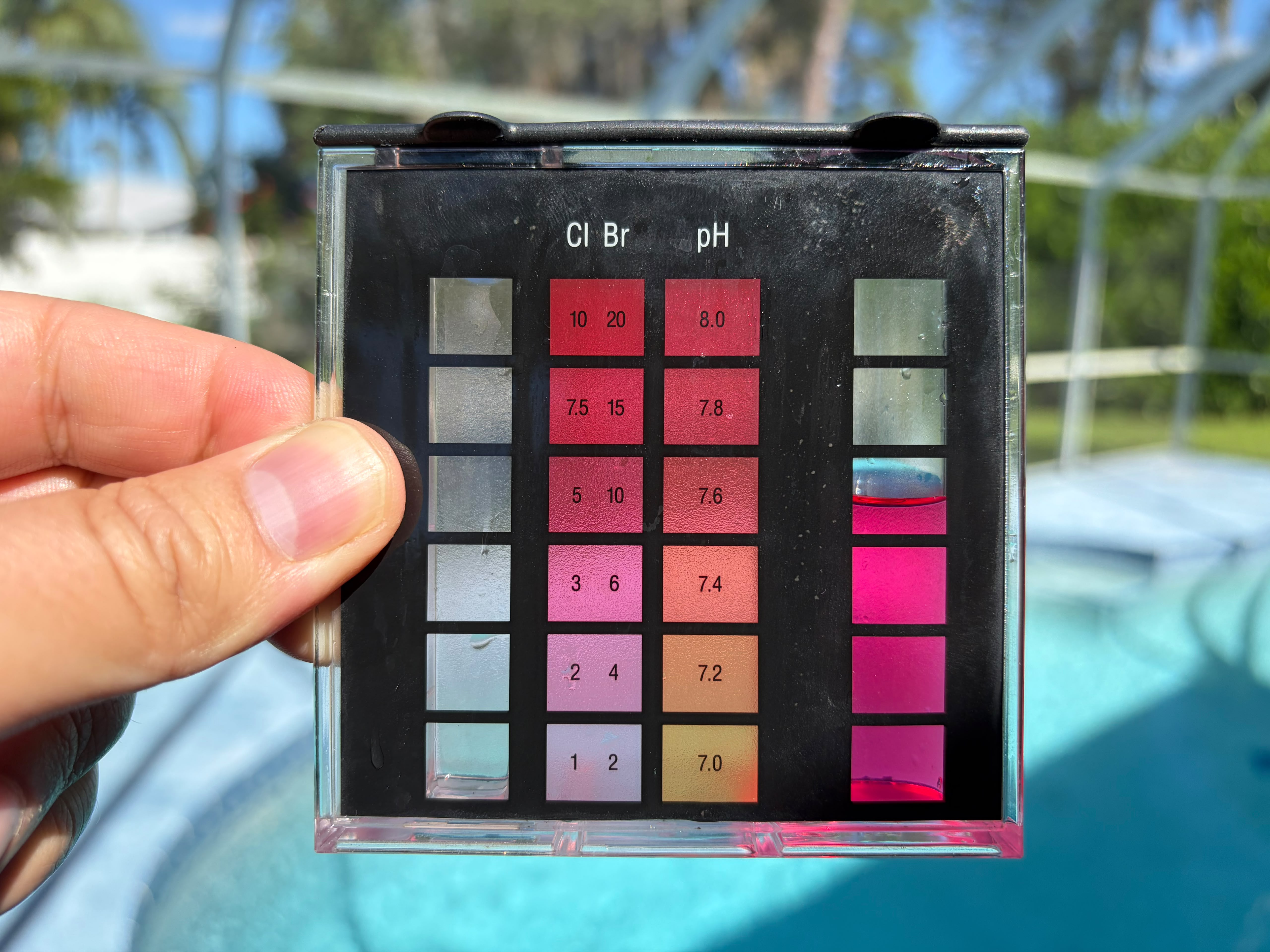
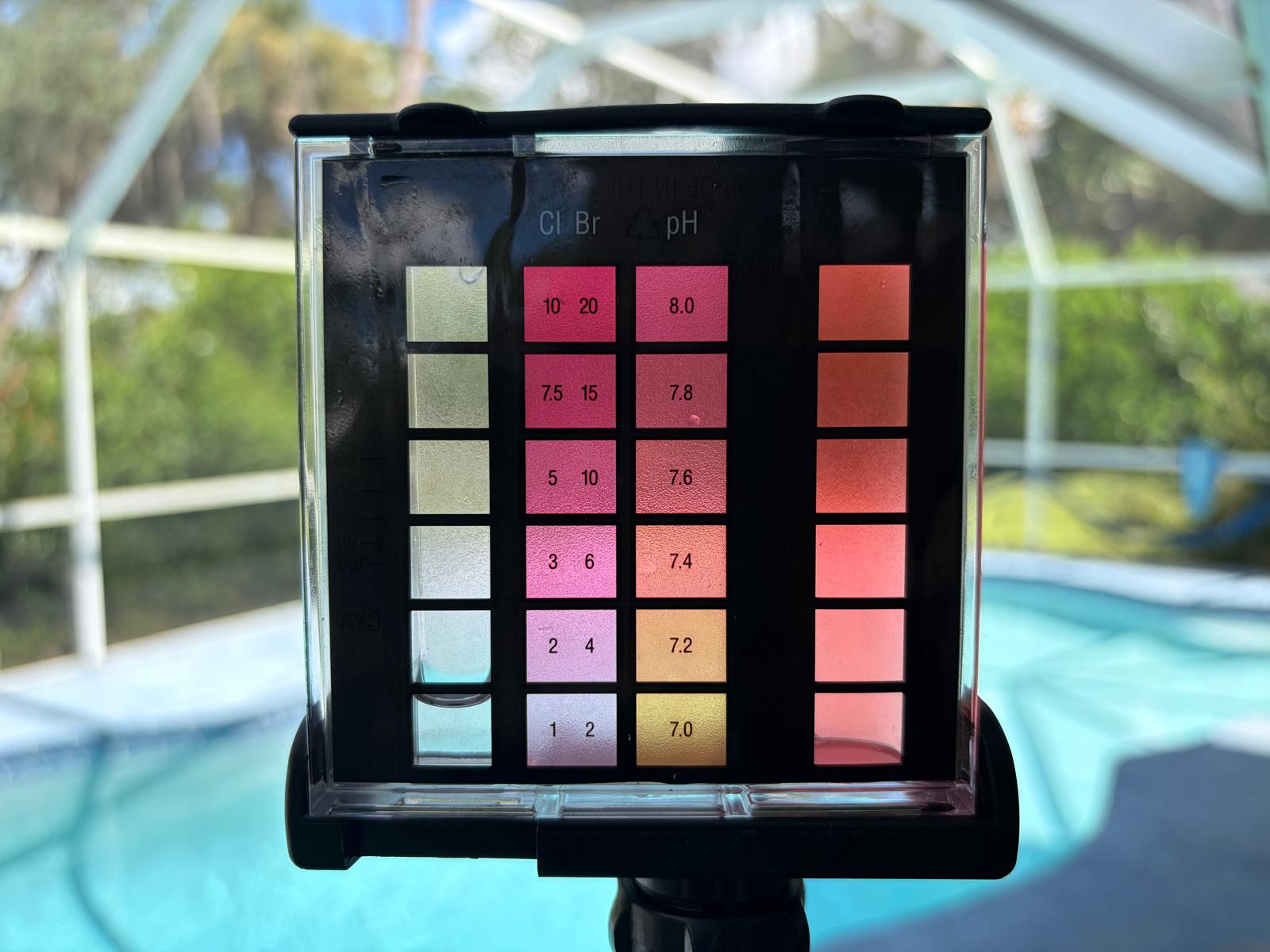
If you're going to maintain your own swimming pool, one of the best investments is a reliable testing kit.
Guessing at water chemistry is where DIY pool maintenance can start getting expensive.
The water looks a little cloudy, so more chlorine goes in.
The pH seems high, so muriatic acid goes in.
Someone says alkalinity levels might be low, so baking soda gets added without testing first.
Now several chemical adjustments have been made without knowing what the water actually needed.
Proper chemical dosing should be based on actual testing.
Water chemistry factors such as chlorine, pH, total alkalinity, cyanuric acid, and calcium hardness all play a role in maintaining balanced water.
The goal isn't to constantly add chemicals.
The goal is to use testing to determine when a chemical adjustment is actually necessary.
That's how DIY pool maintenance saves money instead of wasting it.
The Hidden Cost of Chemical Mistakes
Pool chemicals aren't necessarily expensive because of the container sitting on the shelf.
The expensive part can be what happens when they're used incorrectly.
Overcorrecting one chemistry problem can create another.
For example, repeatedly adding acid without accurate testing can drive pH too low.
Allowing pH to remain too high can contribute to scale buildup and cloudy water.
Incorrect total alkalinity can make controlling the pool's pH more difficult.
Improper calcium balance can affect the pool surface over time.
And allowing cyanuric acid to become excessively high can complicate chlorine management.
Water chemistry isn't about chasing one perfect number.
It's about maintaining a balance between several factors.
A chemical mistake that costs only a few dollars today can create considerably more work later.
DIY Pool Care Takes Time Every Week
Money isn't the only cost of maintaining your own pool.
Your time has value too.
A swimming pool doesn't care that you're busy.
Leaves still fall.
Skimmer baskets still fill.
Algae still grows.
Chlorine still gets consumed.
The pool floor still collects debris.
And the water chemistry continues changing whether you have time to deal with it or not.
During an easy week, DIY pool maintenance might be relatively quick.
During another week, you may need to brush the pool, vacuum extensively, clean the filter, make multiple chemical adjustments, or troubleshoot cloudy water.
Then Southwest Florida throws a major thunderstorm into the equation.
Now you're dealing with additional water, debris, changing chemistry, and possibly a diluted chlorine level.
Professional services don't simply eliminate the cost of buying chemicals.
They also save time.
For many homeowners, that's an important part of deciding whether DIY maintenance truly saves money.
Florida Pools Can Make DIY Maintenance More Challenging
Pool care costs vary based on environmental factors and pool-specific variables.
A screened swimming pool with little surrounding vegetation may require less cleaning than an uncovered pool beneath several trees.
Pool size matters.
Swimmer use matters.
Sunlight matters.
Rainfall matters.
Water temperature matters.
The condition and size of the filter matter.
Even two similar pools in the same neighborhood can behave differently.
Southwest Florida adds another challenge because there isn't much of an off season.
In colder climates, pool owners may winterize their pools and stop maintaining them for part of the year.
Here, many pools operate year-round.
During the summer, high temperatures, strong sunlight, heavy rain, and warm pool water can make maintaining chlorine and preventing algae particularly important.
That's why a DIY pool care routine that works perfectly one month may need adjustment during another.
Skipping Cleaning Can Cost More Than Cleaning
It can be tempting to skip the physical cleaning when the pool water still looks good.
That can be a mistake.
Regularly removing surface debris reduces the amount of organic material sitting in the water.
Emptying skimmer baskets helps maintain water flow.
Brushing helps prevent algae buildup on pool walls, steps, and other surfaces.
Vacuuming removes material that settles onto the pool floor.
A pool cleaner can automate part of that work, but even an automatic cleaner doesn't eliminate the need to inspect the pool.
Regular upkeep is preventive care.
A few minutes spent removing debris now may prevent a much more frustrating cleanup later.
For homeowners who would rather leave these tasks to a professional, our Weekly Pool Cleaning service provides consistent cleaning, water testing, chemical balancing, and routine pool care.
Algae Can Erase Your DIY Savings Quickly
Algae is one of the easiest ways for DIY maintenance savings to disappear.
A small patch can sometimes be corrected quickly.
Allow algae growth to spread and the situation changes.
Now you may need additional chlorine, repeated brushing, filter cleaning, longer circulation, and additional chemical testing.
The water may also remain cloudy after the algae is killed while the filter removes the remaining material.
A severe algae problem can require considerably more chemicals and labor than the regular maintenance that could have helped prevent it.
This is why consistency matters so much.
DIY pool maintenance doesn't save money if routine care is repeatedly postponed until the pool develops a major problem.
Your Pool Equipment Is Part of Pool Maintenance Too
Water chemistry and cleaning receive most of the attention, but your pool equipment is a major part of the investment you're protecting.
The pool pump, filter, valves, plumbing, and circulation system needs professional attention too.
A pool owner performing DIY maintenance should watch for:
- Rising filter pressure
- Weak return flow
- Air entering the system
- Water leaks
- Unusual pump noises
- A pump basket that isn't filling normally
- Damaged seals or fittings
- Changes in circulation
- Unusual water loss
Proper equipment maintenance can help extend equipment life and reduce the chance of premature failure.
The important part is recognizing potential issues early.
A pool pump shouldn't have to fail completely before somebody realizes something was wrong.
Professional pool services have an advantage here because someone who works around pool equipment regularly may notice a developing problem that a homeowner doesn't recognize.
That doesn't mean a DIY pool owner can't do the same thing.
It means inspecting equipment needs to be part of the DIY maintenance routine.
Running the Pool Pump Is Part of the Cost Too
Another cost that homeowners sometimes overlook is electricity.
Many pools need the pool pump daily to run long enough for proper circulation and filtration.
How long a pool pump should run daily isn't a single number that applies to every swimming pool.
Pool size, pump type, pump speed, plumbing, filtration, weather, swimmer use, and other factors all affect circulation needs.
Simply running the pump longer isn't always the solution to cloudy water or algae.
If the underlying problem is poor chemistry, a dirty filter, restricted circulation, or another equipment issue, additional runtime may simply increase electricity use without correcting the actual problem.
Good pool maintenance involves keeping the entire system working efficiently.
A Cheap Chemical Isn't Cheap If You Don't Need It
One of the biggest advantages professional pool technicians develop over time is understanding what not to add.
Many homeowners searching for DIY maintenance tips encounter endless recommendations for household products and inexpensive chemical substitutes.
Sometimes those products have legitimate uses.
Baking soda is sodium bicarbonate and can be used to raise total alkalinity.
That doesn't mean your swimming pool needs baking soda.
The same principle applies to chlorine, acid, stabilizer, calcium products, algaecides, and other chemicals.
Adding chemicals because somebody online said pools need them is not a pool care strategy.
Test first.
Make the appropriate chemical adjustment.
Then test again when necessary.
A well-maintained pool shouldn't be a chemistry guessing game.
Small DIY Mistakes Can Become Costly Repairs
The biggest financial risk of DIY pool maintenance isn't necessarily the weekly chemical bill.
It's failing to recognize a developing problem.
Small issues are usually easier to correct.
A filter that needs cleaning is manageable.
A completely restricted filtration system is a bigger problem.
Slight algae buildup is manageable.
A green pool requires considerably more work.
A minor chemistry adjustment is manageable.
Water that has remained badly unbalanced for a long period can begin affecting the pool surface and equipment.
A small equipment leak may be manageable.
Ignoring it until other components are damaged can lead to expensive repairs.
Regular maintenance is about finding the small problems while they're still small.
When DIY Pool Maintenance Makes Sense
DIY pool maintenance can be a great option for the right pool owner.
It may make sense if:
- You enjoy working on your own pool
- You have time every week for regular upkeep
- You own the right tools
- You use a reliable testing kit
- You understand basic water chemistry
- You're comfortable making chemical adjustments
- You regularly inspect pool equipment
- You don't postpone maintenance when you're busy
- You're willing to learn how your particular pool behaves
For that homeowner, maintaining their own pool can become a routine.
And yes, it can save money.
When Professional Pool Services May Save More Than DIY
Professional pool services make more sense for other homeowners.
Maybe you travel frequently.
Maybe you don't want to spend part of every weekend performing swimming pool maintenance.
Maybe chemistry isn't something you're interested in learning.
Maybe you've already spent too many afternoons trying to fix cloudy water.
Or maybe you've discovered that every attempt to save money on DIY pool maintenance ends with another trip to the pool store.
Professional pool care can provide consistency.
Someone is checking the pool weekly, testing the water, cleaning surfaces, removing debris, making chemical adjustments, and watching for potential equipment issues.
That ongoing attention can help prevent costly problems and save time.
The service itself costs money, but what you're buying isn't only chlorine and cleaning.
You're buying time, consistency, experience, and preventive care.
You can learn more About Us and how Harbor Line Pool Care approaches dependable, personalized pool care for local homeowners.
What About a Hybrid Approach?
Pool maintenance doesn't necessarily have to be completely DIY or completely professional.
Some homeowners are comfortable handling routine cleaning but want professional help with chemistry or equipment problems.
Others use professional weekly pool service but handle small tasks such as emptying a skimmer basket between visits after a storm.
The right approach depends on the pool owner.
What matters is that the swimming pool receives consistent maintenance.
A half-DIY approach doesn't work if everybody assumes somebody else is taking care of the water.
Know who is responsible for testing, chemical dosing, cleaning, filter maintenance, and inspecting equipment.
Is DIY Pool Maintenance Really Saving You Money?
So, is DIY pool maintenance really saving you money?
It certainly can.
A knowledgeable pool owner who performs regular maintenance, uses the right tools, tests accurately, and catches small issues early can reduce the cost of professional service.
But there is another side to the equation.
DIY maintenance requires time.
You need cleaning equipment.
You need chemicals.
You need a reliable testing kit.
You need to understand water chemistry.
And you need to consistently maintain the pool even when life gets busy.
The savings can disappear when incorrect chemical dosing creates water problems, algae takes over, filtration is neglected, or equipment problems aren't noticed until they become costly repairs.
The cheapest way to care for a swimming pool isn't necessarily whichever option has the lowest monthly bill.
It's the approach that keeps the pool consistently maintained while preventing expensive problems in the long run.
DIY Pool Maintenance vs. Professional Pool Service in North Port
For many North Port homeowners, the real question isn't whether they can maintain their own swimming pool.
They can.
The question is whether they want pool maintenance to become another weekly responsibility.
If you enjoy testing water, brushing pool surfaces, vacuuming the pool floor, cleaning filters, buying pool chemicals, monitoring chlorine, and inspecting equipment, DIY pool care may be right for you.
If you'd rather spend your time in the pool and swim instead of maintaining it, Harbor Line Pool Care can help.
We provide professional pool service in North Port, Florida, with weekly pool cleaning, water testing, chemical balancing, equipment checks, and ongoing attention to the condition of your swimming pool.
Our goal is simple: maintain safe water, balanced chemistry, dependable equipment, and crystal clear water to support safety without making pool care another job on your weekend schedule.
So, Is DIY Pool Maintenance Worth It?
DIY pool maintenance can save money — when it's done correctly.
But chemicals are only one part of the cost.
Your time, equipment, testing supplies, cleaning tools, knowledge, and risk of mistakes all belong in the calculation.
For some pool owners, doing the work themselves is worth the investment.
For others, professional service saves time, reduces frustration, catches potential issues earlier, and helps avoid costly repairs.
Whichever approach you choose, consistent pool maintenance matters far more than whether the person holding the skimmer net is you or a professional.
If you're ready to spend less time maintaining your pool and more time enjoying it, Contact Harbor Line Pool Care to learn more about professional weekly service.
Harbor Line Pool Care — dependable weekly pool care for North Port homeowners.