What Total Alkalinity Actually Does
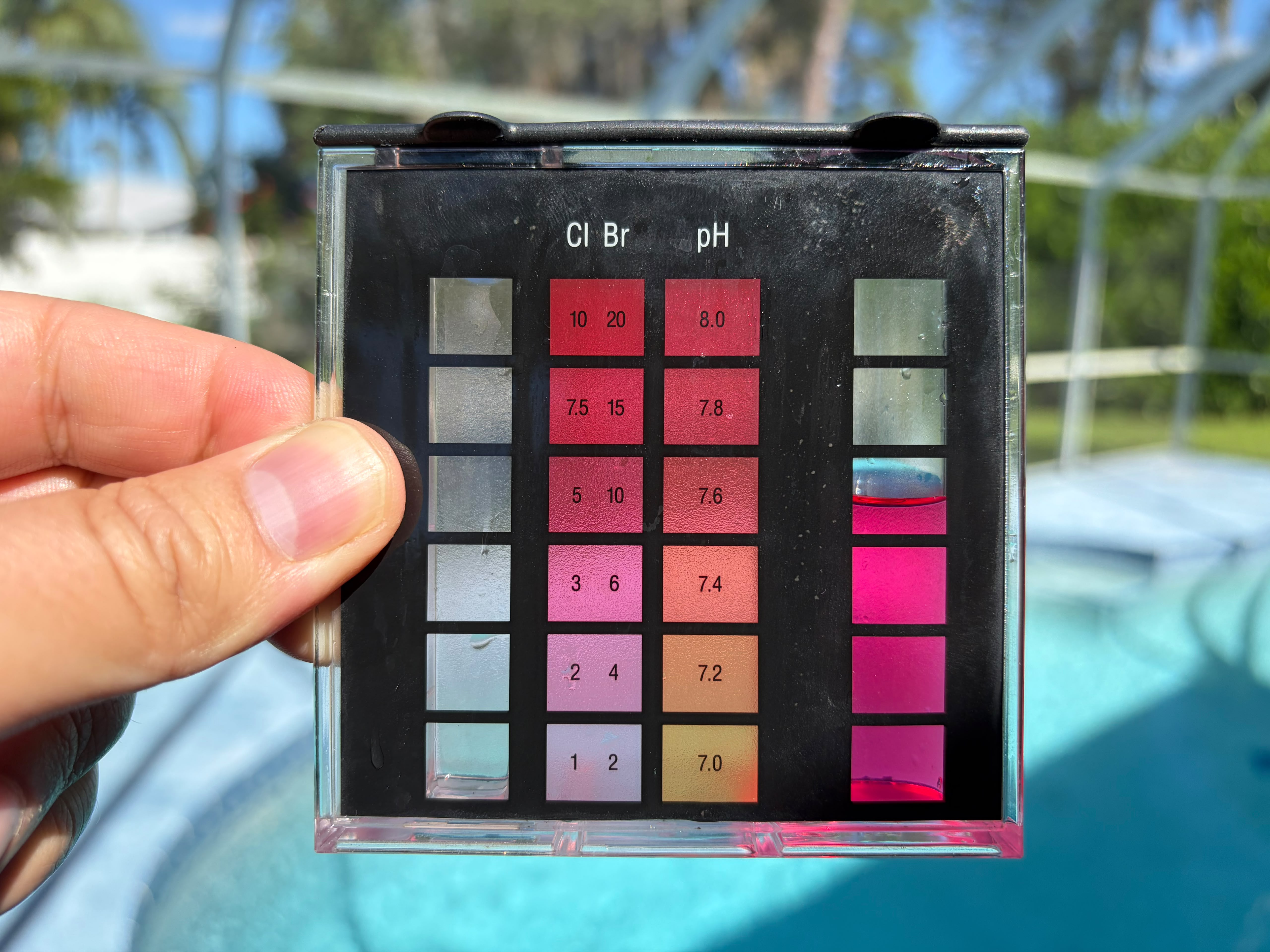
Pool alkalinity is one of those numbers homeowners are told to check without anyone really explaining why it matters. You test the water, see a total alkalinity reading, and are told it should usually fall somewhere around 80 to 120 parts per million.
But what is alkalinity actually doing in your swimming pool?
The short answer is that total alkalinity gives your pool water buffering capacity. It helps prevent the pool's pH from changing too quickly when acid, rainwater, chlorine, swimmers, or other chemicals enter the water.
That makes alkalinity less about chasing one perfect number and more about creating stable pool chemistry.
What Is Total Alkalinity?
Total alkalinity measures the acid-neutralizing capacity of the pool water. In a typical swimming pool, bicarbonate makes up most of the carbonate alkalinity, although other buffering systems—including cyanurate when CYA is present—can contribute to the total alkalinity reading.
The result is usually measured in parts per million, or ppm, as calcium carbonate.
This is different from pH.
pH measures how acidic or basic the water is at that moment. Total alkalinity measures the water's ability to resist a rapid change in pH.
Think of pH as the current temperature in a room and alkalinity as the insulation. The thermostat may say exactly what the temperature is right now, but good insulation helps prevent that temperature from swinging wildly every time conditions change.
Your pool works in a similar way.
Why Pool Alkalinity Matters
Without enough alkalinity, your pool has very little buffering capacity. Small chemical additions or environmental changes can cause the pH to move dramatically.
That sudden movement is sometimes called pH bounce.
A pool might test at an ideal pH one day and then shift much more than expected after rain, chemical treatment, or heavy swimmer use. Low alkalinity makes the water chemistry harder to predict because there isn't enough buffering capacity to resist those changes.
Higher alkalinity provides more resistance to acid. That can make pH more stable, but more isn't automatically better.
If alkalinity becomes too high, the pool's pH can become harder to adjust. High total alkalinity can also contribute to persistent pH rise and, depending on the rest of the water chemistry, increase the likelihood of scale or cloudy water.
The goal is balance.
What Is the Ideal Total Alkalinity Range?
For most residential swimming pools, 80 to 120 ppm is a useful general target range for total alkalinity.
That does not mean every pool must sit at exactly 100 ppm.
Different sanitizers, fill water, pool surfaces, salt systems, aeration, and other chemistry can affect where an individual pool behaves best. A pool that remains stable at 80 ppm does not need chemicals dumped into it simply because someone prefers seeing 100 on the test kit.
This is one reason weekly pool maintenance should focus on trends instead of blindly chasing textbook numbers.
The best target is a range that keeps the pool's pH predictable while maintaining the rest of the water balance.
What Happens When Alkalinity Is Too Low?
Low alkalinity means the water has less ability to neutralize acids.
That makes pH easier to push around.
Rain, chemical additions, acidic sanitizers, and even changes in source water can create larger-than-expected movements. A swimming pool with very low alkalinity may require repeated pH corrections because the water simply does not have enough buffering capacity.
Low alkalinity can also contribute to corrosive or aggressive water when combined with low pH and other unfavorable water chemistry.
That matters for more than swimmer comfort. Aggressive water can affect metal components, heaters, grout, plaster, and other pool surfaces over time.
A vinyl liner doesn't eliminate the need for balanced chemistry either. Even though vinyl isn't plaster, the pool still contains equipment, fittings, metals, and other components affected by water balance.
How Do You Raise Pool Alkalinity?
The most common chemical used to raise alkalinity is sodium bicarbonate.
Yes, sodium bicarbonate is baking soda.
Pool alkalinity increaser is commonly based on the same chemical. Sodium bicarbonate raises total alkalinity efficiently while causing relatively little change in pH compared with products designed specifically to raise pH.
That distinction matters.
Homeowners sometimes confuse sodium bicarbonate with soda ash, or sodium carbonate. They are not the same chemical and they behave differently in pool water.
Soda ash raises pH much more aggressively. Sodium bicarbonate is generally the better choice when the primary goal is to raise alkalinity without sending the pool's pH much higher at the same time.
When adding sodium bicarbonate, calculate the dose based on the pool volume and current alkalinity rather than simply dumping in a bag.
After adding chemicals, keep the pump running so the treatment can circulate through the pool. Give the water time to mix before pulling another water sample and deciding whether more is necessary.
Pool chemistry works better when adjustments are measured instead of rushed.
What Happens When Alkalinity Is Too High?
High alkalinity creates the opposite problem.
Instead of pH moving too easily, the water becomes more resistant to adjustment. You may add acid, watch the pH come down, and then notice it climbing again.
People sometimes describe this as pH being “locked” around 7.8 or higher.
It isn't literally locked.
Higher carbonate alkalinity can increase the potential for carbon dioxide outgassing, particularly when the water is being aerated. As carbon dioxide leaves the water, pH rises. At the same time, higher alkalinity provides greater buffering capacity, so more acid is required to produce the same pH change.
That combination can make the pool feel stubborn.
You lower the pH.
It rises again.
You add more acid.
Then you're wondering why the pool seems determined to fight you.
This cycle is especially noticeable in pools with strong aeration, waterfalls, spa spillovers, fountains, saltwater chlorine generators, or other features that increase carbon dioxide loss.
How Muriatic Acid Lowers Alkalinity
Muriatic acid lowers both pH and total alkalinity.
When acid is added to pool water, it reacts with bicarbonate and other alkaline substances. That reduces the water's acid-neutralizing capacity, which means total alkalinity drops.
Dry acid, usually sodium bisulfate, can also lower pH and alkalinity. However, muriatic acid is commonly used in residential pool service because it is effective and does not add sulfates to the water.
This is why lowering alkalinity usually takes more patience than raising it.
You aren't simply adding a chemical that targets one number while leaving everything else alone. The pH and alkalinity are connected.
Lowering Alkalinity Without Crashing pH
If total alkalinity is high, continuously adding large amounts of acid until the alkalinity reaches the target can push the pH too low.
A better approach is controlled adjustment.
Acid lowers both pH and alkalinity. Aeration can then raise pH again without restoring the alkalinity that the acid removed.
That creates a useful cycle:
Add enough acid to bring pH down safely, allow the water to circulate, and then allow aeration to help the pH rise again. Repeat the process as needed until alkalinity reaches the desired range.
The important point is that this is a process, not a race.
There is rarely a reason to force a large alkalinity correction in one chemical addition.
pH and Alkalinity Are Connected
You really can't understand pool alkalinity without understanding pH.
The pH scale tells you whether water is acidic or basic. A pH of 7 is neutral, while swimming pools are normally maintained slightly above neutral.
Alkalinity helps that pH remain predictable.
Imagine two pools that both test at a pH of 7.5.
One has a total alkalinity of 20 ppm.
The other has an alkalinity of 90 ppm.
The pH reading may look identical right now, but those pools do not have the same water chemistry. The first pool has very little buffering capacity and may react dramatically to the next chemical addition. The second has considerably more resistance to sudden change.
That's why testing pH without alkalinity only gives you part of the picture.
If you want a deeper look at the other half of that relationship, our guide to understanding pool pH without the chemistry lesson explains why pH changes and what those changes mean for your pool.
Does Alkalinity Affect Chlorine?
Alkalinity affects chlorine mostly through its relationship with pH and overall water balance.
You don't raise alkalinity because sodium bicarbonate somehow makes chlorine stronger. Instead, keeping alkalinity under control helps keep the pool's pH from becoming difficult to manage.
When water chemistry stays predictable, maintaining an appropriate chlorine level becomes easier too.
This is especially important in Southwest Florida, where heavy rain, high temperatures, intense sunlight, and frequent swimming can change pool water quickly.
Our North Port pool service regularly deals with these conditions, particularly during the rainy season when pool chemistry can change significantly between visits.
Liquid Chlorine and Alkalinity
Liquid chlorine is another reason homeowners sometimes misunderstand pH and alkalinity.
When sodium hypochlorite is added, it temporarily raises pH. As the chlorine is consumed, much of that initial pH increase is reversed, so the long-term effect is considerably smaller than the immediate change may suggest.
That doesn't mean alkalinity should be ignored.
The pool still needs enough buffering capacity to remain stable as sanitizers, rain, swimmers, acids, and other chemicals interact with the water.
The goal isn't to prevent pH from ever changing.
That's impossible.
The goal is to keep those changes manageable.
Total Alkalinity Is Only Part of Water Balance
A swimming pool can have perfect alkalinity and still have poorly balanced water.
Calcium hardness matters.
pH matters.
Water temperature matters.
Cyanuric acid matters.
Total dissolved solids matter.
These factors, along with corrected carbonate alkalinity, come together in calculations such as the Langelier Saturation Index, often shortened to LSI. Pool surface doesn't change the LSI calculation itself, but it does affect why the resulting water balance matters.
The LSI helps determine whether water is more likely to deposit calcium scale or become aggressive toward calcium-containing pool surfaces.
This is why treating alkalinity as an isolated number can cause problems. A high alkalinity reading means something different when calcium hardness and pH are also high than when those values are relatively low.
Good pool chemistry looks at the entire water sample.
That’s also why pool water can look perfect even when problems are developing beneath the surface—clear water doesn't necessarily mean every part of the water chemistry is balanced.
Why Test Strips Can Make This Harder
Test strips are convenient, but alkalinity is one area where a good drop-based test kit can provide much better information.
A strip might tell you that alkalinity is somewhere within a broad color range. That's often enough to tell whether something is obviously wrong, but it may not be precise enough when you're calculating a chemical adjustment.
A titration test lets you determine the alkalinity more accurately.
That matters when deciding how much sodium bicarbonate or muriatic acid should be added.
If the first number is wrong, the chemical dose based on that number will be wrong too.
When Should You Test Alkalinity?
For a normally maintained residential pool, alkalinity should be checked regularly as part of routine water testing.
If you maintain your own pool, checking at least weekly is a sensible starting point. Test again after significant chemical adjustments, major water replacement, unusual rainfall, or whenever the pool's pH suddenly becomes difficult to control.
Don't immediately add chemicals based on one questionable result.
Take a proper water sample away from return jets and unusual surface conditions, test carefully, and confirm what the pool actually needs.
Regular testing is a big part of the professional pool cleaning and maintenance we provide because trends often tell you more than a single reading.
Why Florida Pools Need Consistent Chemistry
Pools in North Port and Port Charlotte don't sit in laboratory conditions.
They sit outside through heat, thunderstorms, evaporation, refill water, swimmers, sunscreen, debris, and constant environmental changes.
Heavy rain can dilute water chemistry. Evaporation followed by topping off the pool introduces more source water. Swimmers add contaminants, and chemical treatments make their own changes.
That means alkalinity isn't a number you set once and forget.
It is part of an active system.
For homeowners using our North Port pool service or Port Charlotte pool service, maintaining that stability is one of the reasons regular service prevents small chemistry problems from becoming larger ones.
Stop Chasing One Perfect Number
The biggest mistake with total alkalinity is treating the target range like a scoreboard.
If your alkalinity is 90 ppm and the pool's pH stays stable, there is no prize for getting it to exactly 100.
Likewise, dumping chemicals into a pool simply because one number moved slightly can create a new problem while fixing one that barely existed.
Pool chemistry is about balance.
Total alkalinity should provide enough buffering capacity to keep pH manageable without becoming so high that the water constantly fights pH adjustments.
That's what total alkalinity actually does.
It doesn't sanitize the water. It doesn't kill algae. It doesn't replace chlorine, filtration, or regular pool maintenance.
It gives the rest of your water chemistry a more stable foundation.
And when alkalinity, pH, chlorine, calcium hardness, circulation, and filtration are all working together, your pool becomes much easier to keep clear, comfortable, and ready to swim in.
If keeping track of all those moving parts isn't how you want to spend your week, Harbor Line Pool Care provides owner-operated weekly pool service throughout North Port and Port Charlotte, with water testing and chemistry adjustments handled as part of routine care.