Why Your Pool Water Looks Perfect Until It Doesn't
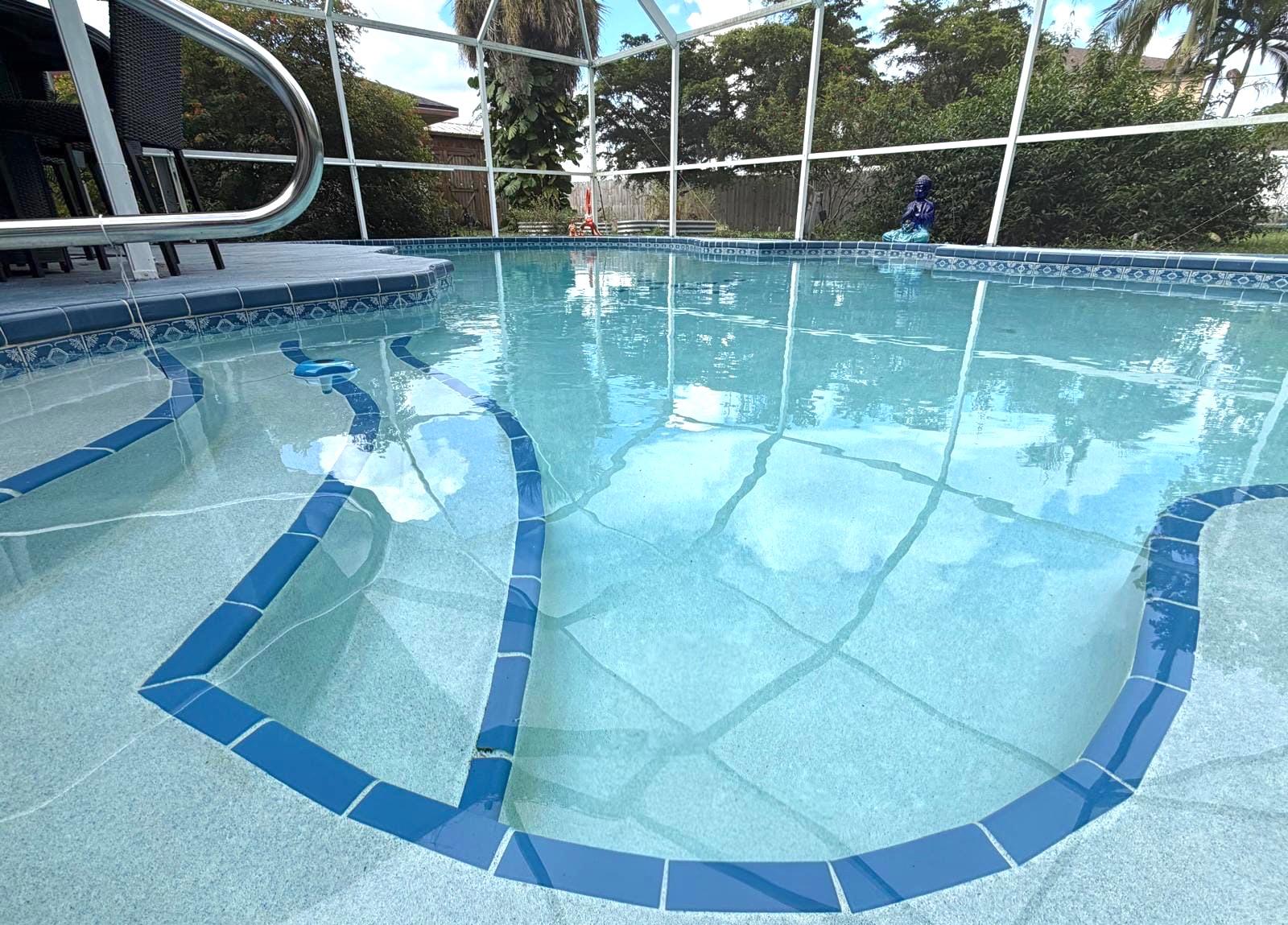
Your swimming pool can look absolutely perfect one day and cloudy, dull, or even green just a day or two later because small, unseen imbalances in water chemistry, filtration, circulation, and weather conditions build up over time before they suddenly become visible.
That sudden change often feels like something went wrong overnight. In reality, most pool water problems start developing long before there are visible signs, which is exactly why residential pool owners—especially homeowners dealing with fast water changes in places like North Port, Florida—need to know what to watch for.
Pool water chemistry, filtration, circulation, temperature, sunlight, rain, debris, and chlorine levels are constantly interacting. This article explains how pH, alkalinity, cyanuric acid, calcium hardness, algae growth, and everyday environmental stress can push water out of balance, even when it looked crystal clear the day before.
That is one of the biggest reasons regular pool maintenance matters: understanding what causes water to turn cloudy or green helps you prevent frustrating, expensive problems and keep your pool clean, balanced, and safe to swim in.
Clear Pool Water Doesn't Always Mean Balanced Water
It is easy to assume that if your pool is clear, everything must be fine.
Unfortunately, water clarity only tells part of the story.
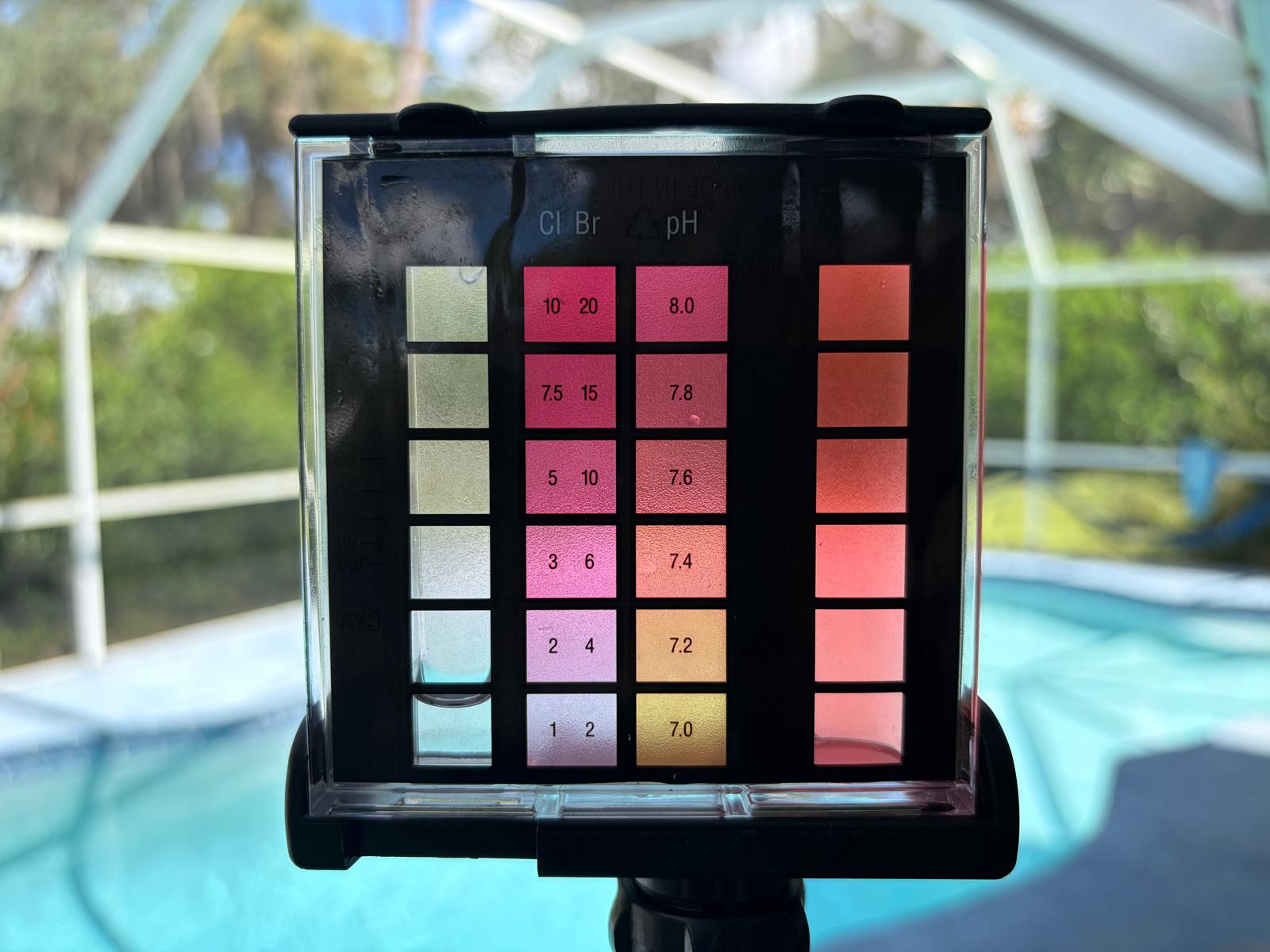
A pool can look perfectly clean while its pH levels, total alkalinity, chlorine, calcium hardness, or cyanuric acid levelsare slowly moving outside their ideal range.
Microscopic algae growth can also begin before you can actually see green water on the walls or surface.
Once the water balance reaches a tipping point, the change can happen fast.
The pool that looked perfect yesterday suddenly becomes hazy or cloudy. A little later, you may notice a green tint. If the problem continues, algae can spread across the pool surfaces and walls.
Chlorine Can Disappear Faster Than You Think
Free chlorine is one of the most important parts of maintaining clean pool water.
It destroys bacteria and helps prevent algae growth, but chlorine is constantly being consumed.
Sunlight breaks chlorine down. Heavy rain introduces contaminants. Leaves, pollen, dirt, oils, sunscreen, and other organic material all increase chlorine demand.
Even a busy weekend in the swimming pool can significantly change the water chemistry.
When chlorine binds with contaminants, it forms combined chlorine rather than remaining available as free chlorine.
If free chlorine drops too low, algae and bacteria suddenly have an opportunity to grow.
The appropriate free chlorine level depends heavily on the pool’s cyanuric acid level, so chlorine should be maintained according to the pool’s CYA rather than relying on one universal target.
That relationship is important.
Cyanuric Acid Can Help Chlorine — Until There Is Too Much
Cyanuric acid, commonly called CYA, protects chlorine from being destroyed too quickly by sunlight.
Without enough CYA, Florida sunshine can burn through chlorine extremely quickly.
But high CYA levels create another problem.
As cyanuric acid increases, more free chlorine is required to maintain adequate sanitation and algae control. If the CYA level becomes excessively high while chlorine remains low, a pool can look clear while conditions are quietly becoming favorable for algae.
This is why simply adding more pool chemicals without testing the water first is not always the answer.
Good pool care is about maintaining the proper relationship between the chemicals in the water.
pH Can Change How Well Chlorine Works
The pH level of pool water affects swimmer comfort, pool equipment, pool surfaces, and chlorine performance.
A common target range for swimming pool water is approximately 7.2 to 7.8.
When pH climbs above the recommended range, it can contribute to scaling, cloudiness, and less favorable overall water conditions. The water can become more prone to scaling and cloudiness.
When pH becomes too low, the water becomes increasingly corrosive. Low pH can damage equipment, metal components, and certain pool surfaces over time, contributing to staining and corrosion.
Total alkalinity helps stabilize pH by buffering it so it does not swing wildly, and it can help prevent conditions that leadto damage when levels drift too low.
For many residential pools, a total alkalinity range around 80–120 ppm is commonly used, although the best target can vary depending on the pool and the chemicals being used.
Keeping pH and alkalinity balanced gives chlorine a much better environment in which to work.
Your Filter May Be Part of the Problem
Pool chemicals cannot do everything.
The filtration system physically removes dirt, debris, oils, and microscopic particles from the water.
If a pool filter becomes dirty or clogged, water flow can decrease. That reduces filtration efficiency and may also reduce circulation throughout the pool.
A dirty filter can allow particles to remain suspended in the water, creating cloudy water even when the basic pool water chemistry appears reasonably balanced.
Different filter systems work differently.
Sand filters are durable and commonly used. Cartridge filters require periodic cleaning. Diatomaceous earth, or DE filters, can remove extremely small particles and provide excellent water clarity when they are maintained correctly.
Regardless of filter type, regular maintenance is necessary.
A filter packed with dirt cannot effectively clean a pool.
Circulation Matters Just as Much as Filtration
Your pump needs to move enough water for chemicals to circulate and contaminants to reach the filter.
Circulation is sometimes described in terms of turnover rate, which estimates how long it takes the pump to move a volume of water equivalent to the pool’s total volume through the circulation system
Poor circulation can create areas where chlorine levels are lower than the rest of the pool.
Steps, corners, behind ladders, and areas with weak return flow can become ideal places for algae to begin growing.
This is also why brushing is an important part of regular pool maintenance.
Consistent weekly pool cleaning helps remove debris, brush problem areas, and catch changes in the water before they become larger problems.
Brushing the walls, steps, and pool surfaces helps loosen dirt and microscopic algae so they can be exposed to chlorine and removed through filtration.
Proper pump run time depends on the size of the pool, pump flow, plumbing, weather, bather load, and equipment.
Rather than relying on one universal number of hours, the goal is to maintain enough circulation and filtration to keep the entire pool clean and properly sanitized.
Florida Rain Can Change Everything
North Port pool owners know how quickly Florida weather can change.
A heavy afternoon storm can dump a tremendous amount of water into a swimming pool.
Rain can introduce dirt, leaves, organic contaminants, and other debris. It can also dilute pool chemicals and alter water balance.
Then the clouds disappear and intense Florida sunlight returns.
Now the chlorine is dealing with additional contaminants while sunlight is simultaneously breaking it down.
Combine that with warm water temperatures and you have conditions algae loves.
A pool can go from perfectly clear to cloudy or slightly green within several days — sometimes even faster.
Why Pool Water Turns Green
Green pool water most commonly points to an algae problem, though copper can also make pool water appear green.
When chlorine levels fall and algae begins multiplying, the water can gradually shift from clear to dull, cloudy, and eventually green.
Cloudy green water often means algae growth has progressed while filtration is struggling to remove the particles suspended in the water.
But algae is not the only thing capable of creating green water.
Certain metals, particularly copper, can also produce a green or blue-green appearance.
That distinction matters because many owners add shock since shocking the pool is a common remedy for algae-related green water, but that approach may not solve the underlying issue and can sometimes make metal discoloration more noticeable.
Testing the water before treating it helps determine whether to add shock or pursue a metal-related treatment.
Calcium Hardness Matters Too
Calcium is another important part of pool water balance.
For many pools, calcium hardness somewhere around 200–400 ppm is a reasonable operating range, although the appropriate level depends on the pool surface and equipment.
Water with very low calcium hardness can become aggressive toward certain pool surfaces.
Hard water with excessive calcium can contribute to scale formation, cloudy water, and deposits on equipment and tile.
Calcium hardness, alkalinity, pH, and water temperature all interact.
That is why pool water balance should be viewed as a complete system rather than a collection of unrelated numbers.
Total Dissolved Solids Build Up Over Time
Every time chemicals, minerals, metals, contaminants, and other substances enter the water, some dissolved material remains behind.
Over time, total dissolved solids, or TDS, can increase.
TDS by itself does not automatically indicate a water-quality problem. Because dissolved salts, minerals, and treatment chemicals naturally accumulate over time, TDS is most useful when considered alongside the pool’s source water, sanitizer system, and overall chemistry.
When specific dissolved substances become excessive or water chemistry becomes difficult to manage, partial draining and replacement with fresh water may sometimes be appropriate.
This is another example of why testing trends over time is more useful than simply looking at whether the pool appears clear today.
The Pool Usually Warns You Before It Turns Green
There are often subtle signs that pool water chemistry is beginning to drift.
The water may lose some of its sparkle. The walls may feel slightly slippery. Chlorine may disappear faster than usual. The filter pressure may change. Dirt may stop clearing as quickly as it normally does.
Then the pool becomes cloudy.
By the time the water turns obviously green, the underlying problem may have been developing for several days.
Catching these changes early usually makes correcting them much easier.
Consistent Pool Maintenance Prevents the Sudden Surprise
The secret to keeping a pool clear is not dumping large amounts of chemicals into it after something goes wrong.
It is maintaining the pool before the problem becomes visible.
As part of that maintenance process, a routine test lets chlorine, pH, alkalinity, calcium hardness, and CYA levels be corrected before they get significantly out of balance.
Routine brushing, filter maintenance, debris removal, and proper circulation are all part of the ongoing process that helps the filtration system keep up with everything entering the water.
That combination is what keeps a pool clear and delivers the benefits of consistent care for overall water quality.
For homeowners in North Port, Florida, the combination of intense sunlight, high temperatures, heavy rain, and year-round swimming makes consistent pool maintenance especially important.
Have questions about water chemistry, cleaning, or ongoing maintenance? Visit our pool service FAQ for answers to common questions about caring for your pool.
Harbor Line Pool Care provides professional North Port pool service, helping homeowners maintain clean, balanced water before small chemistry or equipment problems turn into cloudy or green pools.
Because the best time to fix a pool problem is usually before you can see it.