Understanding Pool pH Without the Chemistry Lesson
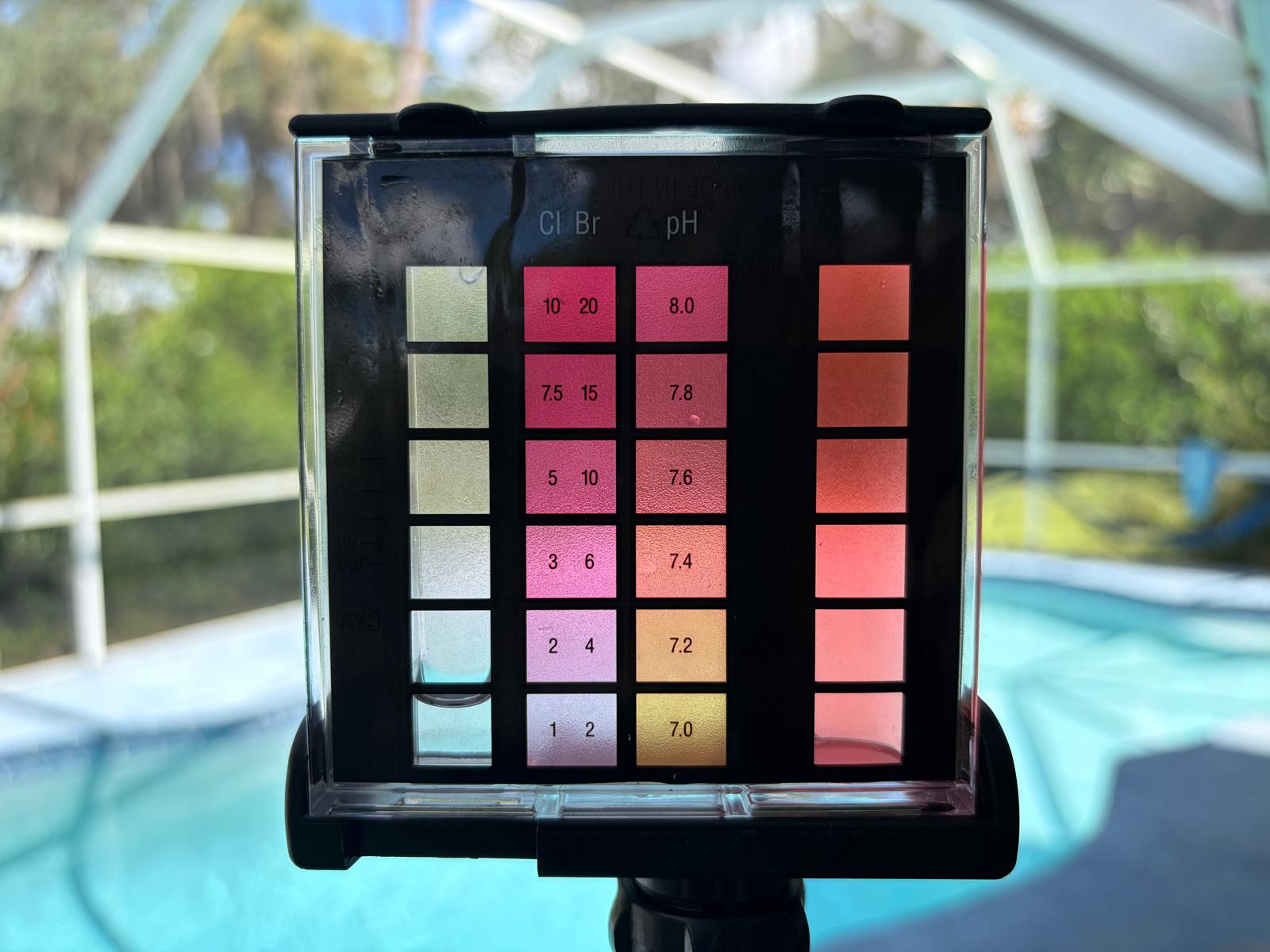
Understanding pH without the chemistry lesson starts with this: pool pH is simply a practical way to read whether your water is too acidic, too basic, or in the right range, and what to do next. If you own a swimming pool and want clear, comfortable water without getting buried in chemistry terms, you only need to understand what pH tells you, why it changes, how it affects chlorine, and what happens when it gets too high or too low.
For swimming pool water, pH is basically a measurement of how acidic or basic the water is. Keeping it within the ideal pH range helps chlorine work properly, protects pool equipment and surfaces, improves water quality and clarity, and makes the pool more comfortable to swim in. That makes pH one of the key parts of water balance, because it affects day-to-day maintenance, swimmer comfort, and how easy your pool is to manage.
What Does Pool pH Actually Mean?
The pH scale runs from 0 to 14. A pH of 7 is considered neutral, values below 7 are acidic, and values above 7 are alkaline or basic. Pool water is normally kept slightly above neutral because that range works well for swimmer comfort, chlorine effectiveness, and equipment protection.
For most swimming pools, an ideal pH range is around 7.4 to 7.6, although water between approximately 7.2 and 7.8 is commonly considered manageable. The goal is not to force pH to sit on one exact number every minute of the day. The goal is to keep it within a stable range.
The pH scale is logarithmic, which means a change of one full pH value represents a much larger chemical change than the numbers might suggest. Fortunately, pool owners do not need to calculate any of that. Regular testing tells you what you need to know.
Why Does pH Matter in a Swimming Pool?
Pool pH affects almost everything happening in the water, and pH affects many aspects of everyday life, including skin health, cooking, and gardening. It influences chlorine performance, swimmer comfort, scale formation, corrosion, water clarity, and how other parts of the water chemistry behave.
When pH is too low, swimming pool water becomes more acidic. Acidic water can contribute to corrosion of metal components, deterioration of certain pool surfaces, and irritation to the skin, eyes, and mucous membranes, especially since your skin is slightly acidic at around pH 5.5.
When pH becomes too high, the water becomes increasingly alkaline. High pH can contribute to cloudy water, calcium carbonate scale, reduced chlorine performance, and deposits on pool surfaces and equipment.
Keeping pH balance is therefore about much more than making a test result look good.
High pH Can Make Chlorine Work Harder
Chlorine effectiveness changes as pH changes. When pH rises, a smaller proportion of the chlorine is present as hypochlorous acid, which is the more powerful sanitizing form of chlorine. As pH rises, the balance shifts away from hypochlorous acid toward the less-active hypochlorite ion. In pools containing cyanuric acid, however, the relationship between pH and chlorine effectiveness is more complicated than the percentages shown on traditional chlorine charts.
That does not mean chlorine suddenly stops working the moment the pH goes above 7.6. It means the sanitizer becomes less efficient as conditions move farther outside the ideal range.
The presence of cyanuric acid, or CYA, also changes the relationship between pH and chlorine in outdoor swimming pools, so the simple charts sometimes used for unstabilized water do not tell the whole story for a typical residential pool.
The practical lesson is much simpler: good pH balance helps maintain effective chlorine without forcing you to add unnecessary chemicals.
Why Pool pH Keeps Rising
Many pool owners feel like they lower pH only to watch it climb again a few days later. In many pools, that is completely normal.
One major reason is the loss of carbon dioxide from the water. When carbon dioxide leaves the pool, pH rises. That off-gassing follows Henry's Law. This process is accelerated by aeration, which is why pools with waterfalls, fountains, spas, bubblers, spillovers, and strongly pointed return jets often experience faster pH rises. For example, a spillover spa can drive faster CO2 loss, and pointed return jets can raise pH the same way.
Even having the pump running increases water movement, and certain water features can increase aeration significantly.
This is why pH sometimes seems to keep creeping upward even when no one has added anything unusual to the pool, since aeration is just one of many factors.
Total Alkalinity Influences pH Stability
Total alkalinity and pH are closely related, but they are not the same thing.
Think of total alkalinity as helping the pool resist sudden pH changes. When alkalinity is too low, pH may become unstable and move around quickly. When alkalinity is too high, pH can become more difficult to manage and may have a stronger tendency to rise.
A commonly used total alkalinity range for residential pools is approximately 80 to 120 ppm, although the best target can vary depending on the pool, sanitizer, surface, and other parts of the water chemistry.
This is why repeatedly adjusting pH without considering alkalinity can become frustrating. If the underlying water balance is working against you, the pH may keep returning to the same problem.
Salt Chlorine Generators Often Come With Rising pH
Owners of saltwater pools, unlike those with traditional chlorine pools, frequently notice that pH rises on a regular basis.
Salt chlorine generators produce chlorine inside the plumbing as the water passes through the salt cell. The process occurring inside the cell, combined with aeration and carbon dioxide loss in the pool, commonly results in a steady upward pH trend. Saltwater pools often have a natural tendency for pH to rise, which is why regular testing and adjustment are important.
That does not mean something is wrong with the saltwater pool. It simply means pH usually requires regular attention.
Many salt chlorine generator pools run beautifully once the owner understands that regular pH testing and occasional acid additions may simply be part of maintaining the system.
Liquid Chlorine Can Affect pH Too
Liquid chlorine is often associated with rising pH because it is alkaline when added to pool water. However, the chemistry is more complicated than simply saying liquid chlorine permanently raises pool pH.
As chlorine is used and consumed, much of that initial pH effect is offset. Other factors such as aeration, total alkalinity, water features, fill water, and chemical additions usually have a much larger influence on long-term pH changes.
This is another reason pool chemistry should be viewed as a complete system rather than blaming one product every time the pH changes.
How Do You Lower Pool pH?
When pH becomes too high, pool owners typically use an acid to lower it.
Muriatic acid is commonly used in residential swimming pools. Another option is sodium bisulfate, often sold as dry acid.
Both can lower pool pH, but the amount needed depends on the current pH, total alkalinity, pool volume, and the strength of the product.
Adding too much acid can push the pH too low, so it is important to calculate the dose correctly and allow the water to circulate before retesting.
Trying to lower pool pH aggressively in one large adjustment can create more problems than making smaller controlled corrections.
How Do You Raise Pool pH?
If the pH level is too low, soda ash, also known as sodium carbonate, is commonly used to raise pH.
Soda ash can raise pH relatively quickly, but it can also increase total alkalinity to some degree. That is why it should be added carefully rather than dumped into the pool without testing.
Baking soda, or sodium bicarbonate, is different. It is alkaline, with a pH around 9, and is mainly used to raise total alkalinity while generally having a smaller effect on pH than soda ash.
This distinction matters because many pool owners hear that baking soda raises pH and assume it is always the best solution. It may help in some situations, but if the main goal is specifically to raise pH, soda ash is usually the more direct chemical, while baking soda is primarily used to raise total alkalinity and generally has a smaller effect on pH.
Don't Chase One Exact pH Number
One of the easiest ways to overcomplicate pool care is to try to force pH to remain at one exact reading.
Pool pH naturally changes. Swimmers introduce body oils and other contaminants. Rain changes water chemistry. Water features increase aeration. Salt chlorine generators operate. Chemicals are added. Fresh water enters the pool through rain or refilling.
All of these factors can influence pH.
The goal is not to eliminate every pH change. The goal is to keep those changes controlled and prevent the water from spending long periods outside the appropriate range.
If the pool is sitting around 7.4 to 7.6 and stays reasonably stable, there is usually no reason to constantly make tiny adjustments.
Consistent weekly pool cleaning and water testing make it easier to catch these changes before they turn into larger water-balance problems.
High pH Can Cause Cloudy Water and Scale
When pH rises too high, calcium becomes more likely to form deposits in the pool.
This can lead to calcium carbonate scale on tile, pool surfaces, equipment, heaters, and salt cells. In some cases, high pH combined with high calcium hardness and high alkalinity can also contribute to cloudy water.
This is where the Langelier Saturation Index, commonly called LSI, becomes useful for professionals. LSI looks at several factors together, including pH, calcium hardness, alkalinity, water temperature, and total dissolved solids, to help estimate whether water is more likely to form scale or become aggressive toward surfaces.
Most homeowners do not need to calculate the Langelier Saturation Index every time they test their swimming pool. The important takeaway is that pH does not operate by itself.
Low pH Can Damage Pool Equipment
If pH stays too low, the water becomes increasingly corrosive.
Over time, acidic swimming pool water can damage metal components, heaters, pumps, fittings, and certain pool surfaces. It can also create uncomfortable swimming conditions and contribute to eye irritation or itchy skin.
Adding too much acid is one common cause of low pH. Low total alkalinity can also make pH unstable and allow it to fall more easily.
Correcting the underlying water chemistry is usually better than repeatedly adding one chemical after another.
Your Fill Water Can Affect pH
Different water sources have different chemistry.
When you add fresh water to the swimming pool after evaporation, heavy usage, maintenance, or partial draining, that new water brings its own pH, alkalinity, calcium, and minerals into the pool.
That means two pools located only a few miles apart can behave differently depending on their fill water, pool surface, equipment, and maintenance routine.
These differences are one reason our Port Charlotte pool service is based on testing each pool individually rather than following the exact same chemical routine for every property.
This is why copying someone else's exact chemical routine does not always work.
The correct solution should be based on your own test results.
How Often Should You Test Pool pH?
Regular testing is the easiest way to prevent pH problems.
During periods of heavy usage, strong sunlight, frequent rain, or rapid chemical changes, testing several times per week can help identify problems before they become significant.
A quality test kit provides much more useful information than trying to judge water chemistry by appearance alone.
Pool water can look crystal clear while the pH, alkalinity, chlorine, or cyanuric acid levels are already moving outside their ideal range.
That’s why a pool can look perfect even when problems are developing beneath the surface.
Clear water is good.
Balanced water is better.
pH Doesn't Have to Be Complicated
You do not need to understand every reaction involving hydrogen ions, carbon dioxide, sodium hydroxide, hypochlorous acid, or calcium carbonate to maintain good pool water.
For most pool owners, the important points are simple: test regularly, keep pH within a reasonable range, maintain appropriate total alkalinity, and avoid making large chemical corrections without knowing what the water actually needs.
If pH rises, determine whether alkalinity, aeration, a salt chlorine generator, water features, or other conditions may be contributing. If pH falls, look at acid additions, alkalinity, and the overall water balance.
Good pool care is about maintaining stability rather than constantly fighting the water.
For North Port homeowners, Harbor Line Pool Care provides professional pool maintenance and weekly North Port pool service designed to keep pool pH, chlorine, alkalinity, and overall water chemistry balanced while protecting your swimming pool and equipment.
Because you should be able to enjoy your pool without needing a chemistry degree to understand it.