What Happens If You Skip Weekly Pool Service?
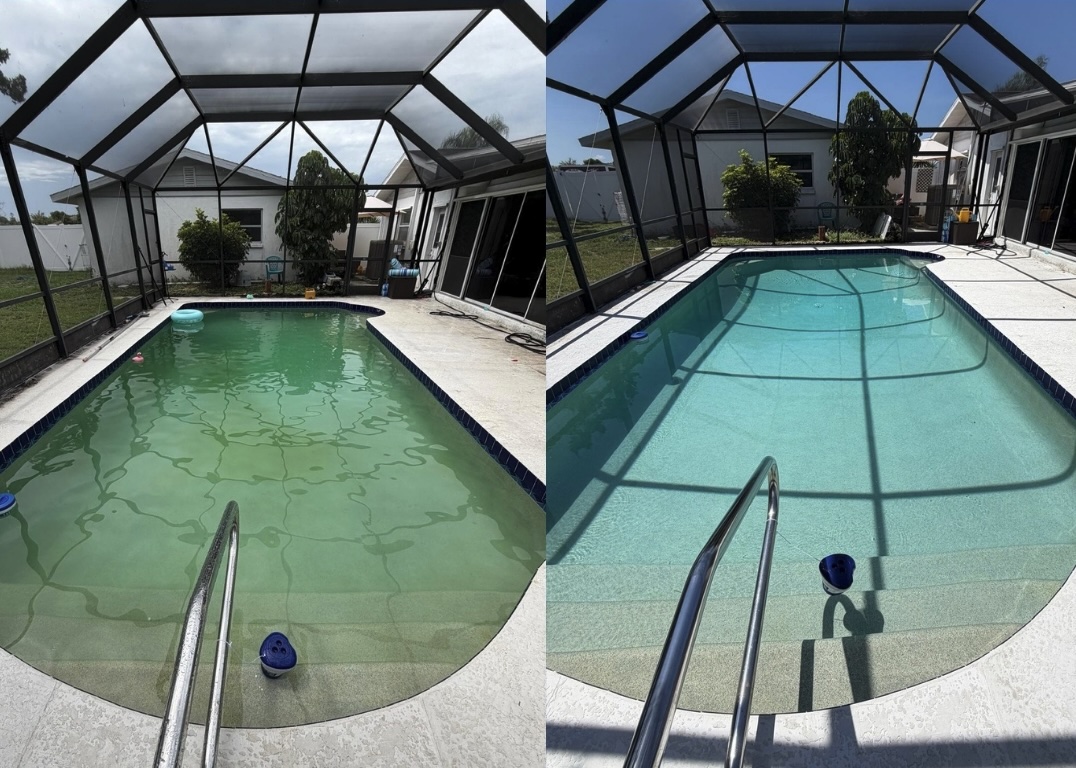
Skipping one week of pool service might not seem like a big deal. The pool water is still clear, the pump is running, and there aren't many leaves on the pool floor. What could really happen in seven days?
In Southwest Florida, quite a bit can change.
Heat, intense sunlight, thunderstorms, swimmers, leaves, insects, and other debris continuously affect a swimming pool. Chlorine levels fall, pH drifts, skimmer baskets fill, filters collect debris, circulation systems work harder, and algae can begin taking hold in areas with weak water flow.
So, what happens if you skip weekly pool service? Chlorine can drop, water chemistry can become unbalanced, algae and cloudy water can develop, debris can reduce circulation and filtration, and pool equipment can take on extra wear that leads to higher chemical use and costly repairs over time.
Missing one weekly service visit doesn't automatically mean you'll wake up to a neglected pool full of green water. But the longer a pool goes without water testing, chemical balancing, weekly cleaning, filter and basket clearing, and an equipment check, the greater the chance that several small problems begin happening at the same time.
For residential pool owners—especially in Southwest Florida's warm climate—this is why weekly pool service is preventive care, not a luxury. Below, you'll see how skipped service affects water balance, algae growth, debris buildup, filtration and equipment performance, water clarity, scale, long-term costs, and what professional weekly service is meant to handle so the pool stays clean, safe, balanced, and ready to use.
1. Skipping Weekly Pool Service Can Cause Chlorine Levels to Drop
Chlorine doesn't remain in pool water indefinitely.
Sunlight, swimmers, rain, organic material, and other debris all consume chlorine. Florida's intense sunlight makes maintaining proper chlorine levels particularly important.
Cyanuric acid helps protect chlorine from UV degradation, but it doesn't stop chlorine from being consumed. Even a well-maintained pool needs regular chemical testing to make sure sanitizer remains where it should be.
When chlorine levels become too low, water quality can deteriorate because chlorine or bromine is the primary defense against harmful microorganisms in pools. Neglected pools can also harbor harmful bacteria such as E. coli.
The CDC recommends maintaining proper sanitizer and pH levels as part of keeping residential pool water healthy. Skipping maintenance also increases health risks, including gastrointestinal illnesses.
That's why regular pool maintenance saves you money and the reason water testing is an important part of professional weekly pool service.
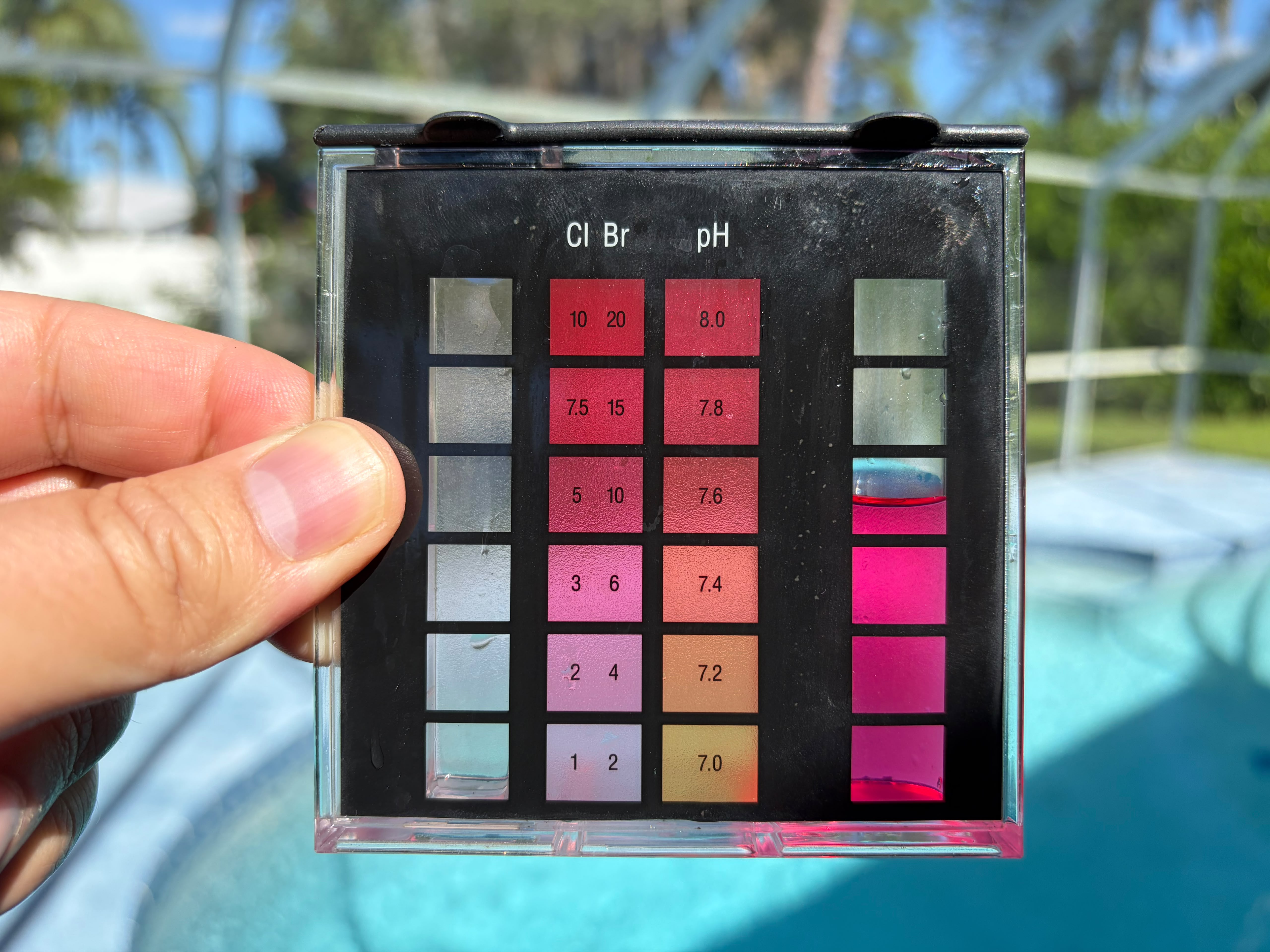
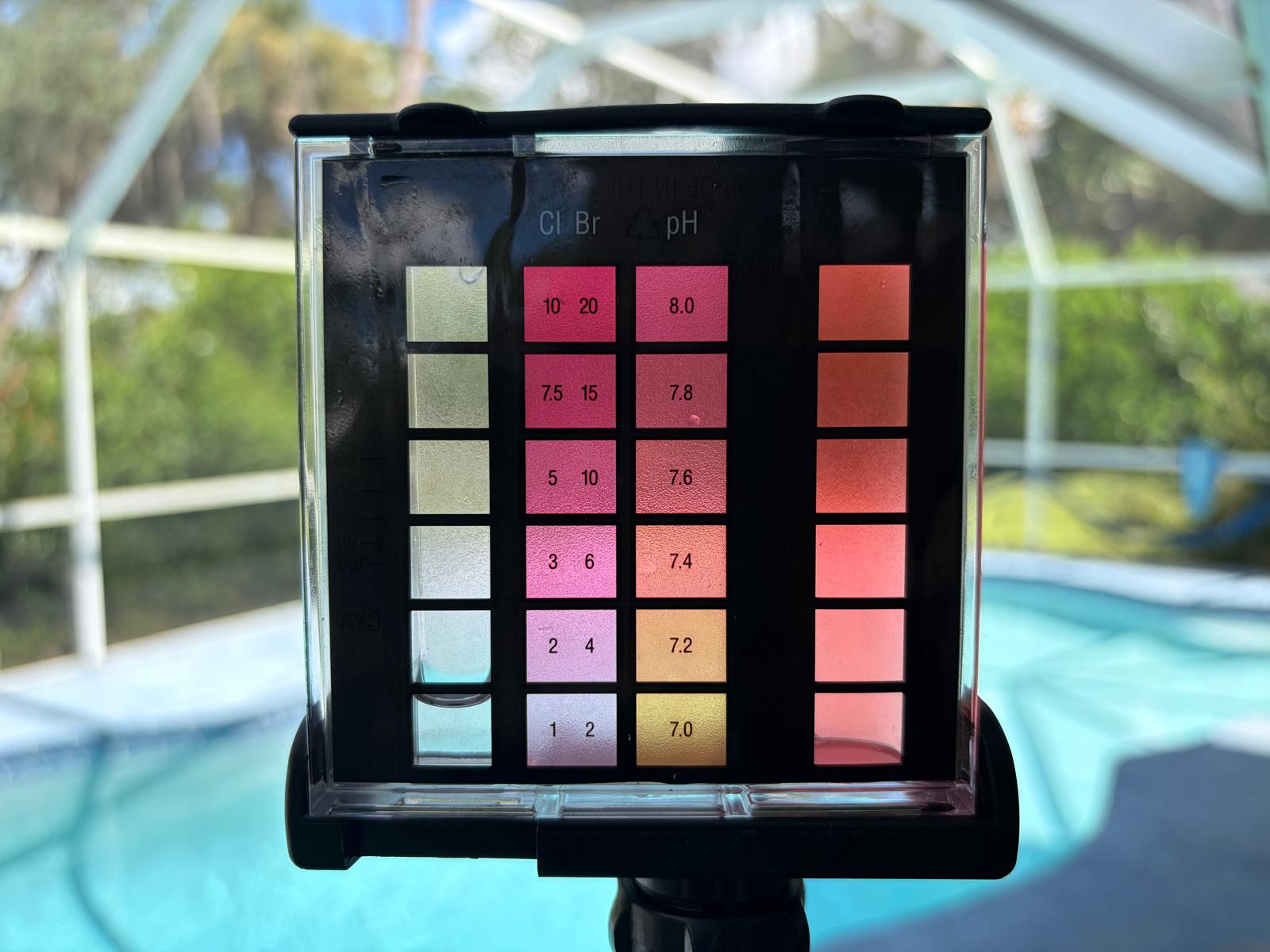
A pool can still look crystal clear while its chlorine level is already moving in the wrong direction.
2. Water Chemistry Can Become Unbalanced
Chlorine is only one part of water chemistry.
Routine pool maintenance also involves monitoring factors such as:
- Free chlorine
- pH
- Total alkalinity
- Cyanuric acid
- Calcium hardness
These measurements affect one another and the overall condition of the pool water.
High pH can contribute to cloudy water and scale buildup. Low or improperly balanced pH can create more aggressive water that may contribute to corrosion of metal components and other pool equipment over time.
Total alkalinity helps stabilize pH, while calcium hardness also plays an important role in protecting pool surfaces.
When weekly pool maintenance is repeatedly skipped, chemical imbalances have more time to develop unnoticed.
Regular chemical balancing makes small corrections before unbalanced water becomes a larger water quality problem.
3. Skipping Weekly Pool Cleaning Gives Algae a Chance to Grow
Algae growth is one of the biggest concerns with a neglected pool.
Algae spores are constantly introduced into outdoor pools through wind, rain, landscaping, swimmers, equipment, and the surrounding environment.
Normally, adequate chlorine levels, circulation, filtration, brushing, and regular maintenance keep algae under control.
Once those defenses weaken, algae can begin establishing itself on the pool walls, steps, corners, tile line, and sections of the pool with poor circulation.
At first, it might be nothing more than a small green patch.
If conditions continue to favor algae growth, small patches can become widespread algae blooms and eventually turn pool water green.
Some algae problems are also much harder to remove than others. Suspected black algae, for example, requires more attention than simply brushing away a small patch of ordinary algae.
Consistent weekly pool cleaning makes it much easier to spot a developing problem before the pool requires a Green to Clean service.
4. Surface Debris Can Affect the Entire Pool System
Leaves on the pool floor aren't just an appearance problem.
Grass, pollen, insects, flowers, leaves, and other debris continually enter outdoor pools.
Some surface debris ends up in the skimmer baskets. Heavier material sinks to the pool floor. Organic debris left in pool water can also increase chlorine demand as it begins breaking down.
When skimmer baskets become packed, water flow can become restricted.
That can affect circulation and reduce how efficiently water moves through the filtration system.
A good weekly pool cleaning service should remove debris, empty skimmer baskets, brush pool walls and steps, vacuum the pool floor when needed, and check other areas where material collects.
Removing debris during weekly cleaning isn't just cosmetic pool care.
It helps the circulation system, filtration system, water chemistry, and pool equipment all do their jobs properly.
5. Skipping Regular Maintenance Makes the Filter Work Harder
Your filter constantly removes particles from circulating pool water.
Eventually, all of that dirt and debris accumulates.
Cartridge filters collect material within the cartridge pleats, while other types of filtration systems trap contaminants in their respective filter media.
As a filter becomes dirty, resistance can increase and water flow can decrease.
A clogged filter can make the pool system less efficient and contribute to weak circulation.
Poor circulation can then create additional problems.
Chemicals don't distribute as effectively.
Filtration suffers.
Cloudy water may develop.
Areas with low circulation can become more vulnerable to algae growth.
The pool pump may also be operating against increased resistance.
Filter cleaning doesn't necessarily need to happen every week, but pressure and flow should be monitored as part of routine maintenance so the filter can be cleaned when it needs it.
That equipment check is one advantage of consistent professional service.
6. A Neglected Pool Can Become Cloudy
A swimming pool can go from crystal clear to cloudy when several small maintenance problems begin stacking up.
The chlorine level drops.
A thunderstorm adds rain and debris.
The filter is already dirty.
The skimmer basket fills.
Circulation decreases.
Water chemistry begins drifting.
Now several separate problems are affecting the same pool.
Cloudy water can be associated with inadequate sanitation, poor filtration, suspended debris, algae growth, or chemical imbalances.
It also creates a visibility concern. Pool owners should be able to clearly see through the water and observe the pool floor.
Weekly pool service helps prevent this chain reaction by addressing pool cleaning, water chemistry, filtration, and circulation together instead of waiting until the pool's appearance shows that something has already gone wrong.
7. Unbalanced Water Can Cause Scale Buildup and Surface Problems
Your pool surfaces remain in constant contact with the water.
That makes long-term water balance important.
High pH and improper calcium hardness can contribute to scale buildup on the tile line, pool surfaces, heaters, filtration equipment, and other components.
You may notice rough calcium deposits developing around the waterline or deposits appearing on equipment.
Water that remains too aggressive can create a different problem.
Over time, poor water chemistry may affect plaster surfaces, metal components, pump seals, and other parts of the pool system.
Missing one week of pool maintenance isn't likely to suddenly destroy a pool surface.
The concern is repeated neglect.
When chemical testing isn't performed consistently, problems with pH, total alkalinity, calcium hardness, chlorine, or cyanuric acid can remain unnoticed for much longer.
Consistent maintenance helps catch those conditions while they can still be corrected through routine pool care.
8. Skipping Weekly Maintenance Can Increase Equipment Wear
The pool pump, filter, plumbing, circulation systems, and other equipment continue operating whether the pool receives service that week or not.
Skipping weekly maintenance doesn't give the equipment a break.
A packed skimmer basket can restrict water flow.
A dirty filter can reduce circulation.
A low water level can affect the pool pump.
Air entering the system can affect pump performance.
Small equipment leaks can become worse.
Scale buildup can affect equipment.
An unusual pump noise may go unnoticed.
Those are all reasons professional weekly pool service should involve more than adding liquid chlorine and leaving.
Regular pool service creates an opportunity to notice changing filter pressure, weak return flow, leaks, unusual noises, damaged equipment, or other signs of equipment wear.
Catching a minor issue during an equipment check can help prevent an inconvenient failure or expensive repairs later.
9. Skipping Pool Service Can Cost More Money in the Long Run
Skipping professional service may seem like an easy way to save money.
Sometimes neglect does exactly the opposite.
Compare a small weekly chemical adjustment with trying to recover badly unbalanced pool water.
During normal weekly maintenance, a pool may need liquid chlorine and, when necessary, a carefully measured amount of muriatic acid or another chemical adjustment.
A neglected pool may instead require:
- Additional chlorine
- Repeated chemical testing
- Extensive brushing
- Additional filter cleaning
- Longer circulation
- Algae treatment
- More time restoring proper chemical balance
The same principle applies to pool equipment.
Regular maintenance may identify a partially blocked basket or declining water flow. Ignoring it gives the problem more time to affect other parts of the pool system.
Consistent maintenance isn't just about spending money on pool service. It's about avoiding unnecessary chemical use, equipment wear, algae cleanup, and potentially costly repairs in the long run.
10. Small Pool Problems Have More Time to Become Costly Repairs
This may be the biggest reason to stay consistent with weekly pool maintenance.
Every weekly service visit provides another opportunity to notice something that has changed.
Maybe the pool suddenly needs more chlorine.
Maybe filter pressure is increasing.
Maybe one return has weak water flow.
Maybe the pool pump sounds different.
Maybe the water level is dropping.
Maybe algae keeps appearing on the same pool wall.
Maybe scale buildup is beginning around the tile line.
None of these automatically means the pool needs expensive repairs.
But each one provides useful information about the condition of the pool.
When regular maintenance is skipped, those warning signs can go unnoticed.
The pool continues operating until a minor issue finally becomes obvious enough to demand attention.
Preventive care gives pool owners a chance to deal with minor problems before they become bigger and more expensive ones.
Is Missing One Week of Weekly Pool Service a Disaster?
Usually, no.
If a properly maintained pool misses one weekly service visit, it doesn't automatically become a green, neglected pool.
How much risk there is depends on the individual pool.
Pool size matters. So do swimmer use, rainfall, sunlight, water temperature, surrounding landscaping, surface debris, filtration, circulation, existing chlorine levels, and the water chemistry before service was skipped.
A screened pool with good water chemistry may handle a missed week very differently from a heavily used uncovered pool that was already struggling to maintain chlorine.
The bigger concern is allowing one missed week to become two, three, or four.
The longer regular maintenance is skipped, the more opportunity there is for chemical imbalances, algae blooms, debris accumulation, filter problems, and equipment wear to develop.
What Should Professional Weekly Pool Service Include?
Weekly pool service should be more than somebody stopping by once a week to pour chemicals into the pool.
Every pool is different, but professional service generally provides an opportunity for:
- Water testing
- Chemical testing and balancing
- Chlorine adjustment
- Checking pH
- Monitoring total alkalinity and other chemistry as needed
- Removing surface debris
- Emptying skimmer baskets
- Cleaning the pump basket when necessary
- Brushing pool walls, steps, and other pool surfaces
- Vacuuming the pool floor as needed
- Monitoring filter pressure
- Checking circulation and return flow
- Inspecting visible pool equipment
- Watching for algae growth
- Noticing unusual water loss
- Checking for changes in pump operation
Filter cleaning and other periodic maintenance can then be performed when needed rather than waiting until poor filtration affects water quality.
Regular testing, weekly cleaning, chemical balancing, circulation, filtration, and equipment checks all work together.
That's what makes weekly pool service different from simply adding chemicals.
Weekly Pool Service Is Preventive Pool Care
Many homeowners think about pool cleaning when they can physically see something wrong.
If the pool water is clear and there isn't much debris, everything appears fine.
But some of the most important parts of pool care can't be judged by looking across the patio.
You can't see the exact chlorine level.
You can't see pH drifting.
You may not notice total alkalinity changing.
You can't immediately see what is collecting inside a filter.
You may not recognize gradual equipment wear.
And you may not notice a small patch of algae hidden in an area with weak circulation until it begins spreading.
Regular water testing and consistent maintenance help keep the pool safe while protecting water quality and equipment.
When sanitizer becomes inadequate, the risk from harmful bacteria and other microorganisms increases. Poor water chemistry can also contribute to eye or skin irritation, while severely cloudy water reduces visibility.
That's why weekly pool service is preventive care for your swimming pool, not simply a cleaning visit.
Frequently Asked Questions About Weekly Pool Service
What happens if you skip weekly pool service for one week?
If the pool was properly balanced beforehand, missing a single week may not cause an immediate problem. However, chlorine levels can fall, pH can drift, debris can accumulate, and algae growth can begin if conditions are favorable.
The risk increases when weekly service is skipped repeatedly.
Can a pool turn green if weekly pool cleaning is skipped?
Yes. A pool can develop algae when chlorine, circulation, filtration, and cleaning are no longer keeping algae growth under control.
Whether that happens after a particular missed week depends on the pool's water chemistry, temperature, sunlight, swimmer use, circulation, and existing conditions.
Does weekly pool maintenance help save money?
Regular maintenance can help save money in the long run by catching small chemistry, filtration, circulation, and equipment problems before they require larger corrections or repairs.
Consistent pool care can also prevent a slightly dirty pool from becoming a neglected pool requiring additional chemicals and labor.
Are chemicals included with a weekly pool cleaning service?
That depends on the pool service company and the service plan.
Pool owners comparing professional service should ask exactly what the weekly service includes, whether routine chemicals are included, how filter cleaning is handled, and whether there are separate charges for specialty treatments or repairs.
Is professional weekly pool service necessary in Florida?
Every pool owner's situation is different, but Florida's warm climate allows pools to operate and grow algae throughout much of the year.
Intense sunlight, heavy rainfall, warm water, debris, and long swimming seasons make consistent weekly maintenance especially valuable for homeowners who don't want to perform their own water testing, chemical balancing, cleaning, and equipment monitoring.
Weekly Pool Service in North Port, Florida
Southwest Florida pools don't get much of an off-season.
Our warm climate, intense sun, heavy summer rain, tropical weather, and long swimming season mean pool water and equipment need regular attention throughout the year.
If you're tired of spending your weekends testing water chemistry, emptying skimmer baskets, brushing pool walls, vacuuming the pool floor, cleaning debris, and trying to figure out where your chlorine went, Harbor Line Pool Care can help.
Harbor Line Pool Care provides dependable North Port Pool Service, including regular water testing, chemical balancing, weekly pool cleaning, equipment checks, and ongoing attention to the overall condition of your pool.
Consistent professional service helps maintain water quality, keep chemistry balanced, reduce algae growth, monitor pool equipment, and keep your pool clean and ready to enjoy.
So, what happens if you skip?
Maybe nothing dramatic happens after one missed week.
But every skipped week gives debris, algae, chemical imbalances, circulation problems, filtration issues, and equipment wear more time to develop.
Regular weekly pool maintenance helps catch those issues sooner, protect the pool system, reduce the chance of costly repairs, and save pool owners money and frustration in the long run.